Most cyber security strategies begin with technology. Firewalls, endpoint protection, identity platforms and monitoring tools are essential, and without them organisations are exposed.
Yet when incidents are examined closely, the initial point of failure is rarely a missing tool – it is far more often a moment of human decision making that attackers successfully exploit.
Employees sit at the intersection of email, data, credentials and systems. Their day-to-day choices determine whether security controls are reinforced or quietly bypassed.
How real attacks actually start
Most modern attacks are designed to blend into normal work. By way of example, imagine a finance team that receives an email which appears to come from a known supplier, referencing a real invoice number and asking for confirmation of bank details. The request is time-sensitive, written in familiar language and arrives during a busy period. Nothing about it looks obviously malicious until funds have already moved.
Another (all-too real) example is when a senior executive receives a file-sharing notification that appears to come from a colleague. The branding is accurate. The wording is plausible. The link leads to a convincing login page that captures credentials before redirecting to a harmless document.
In both cases, technical controls may only engage after the interaction has occurred. Awareness changes the outcome earlier, at the point where a human pauses and questions whether the request aligns with normal behaviour.
MFA fatigue and approval culture
Multi-factor authentication has become a baseline control, but attackers have adapted.
MFA fatigue attacks rely on repeated push notifications sent to a user’s device. Eventually, out of frustration or habit, the user approves one. This tactic has been used successfully in multiple high-profile breaches, including attacks attributed to the Lapsus$ extortion group (Lapsus being the psychoanalytic term for ‘a slip of the tongue’).

As Roman explains, in organisations where employees understand why unexpected MFA prompts are a warning sign, approval rates drop sharply. Where MFA is treated as an inconvenience rather than a security signal, attackers rely on repetition rather than sophistication. Awareness does not remove the need for MFA; it determines whether MFA remains effective.
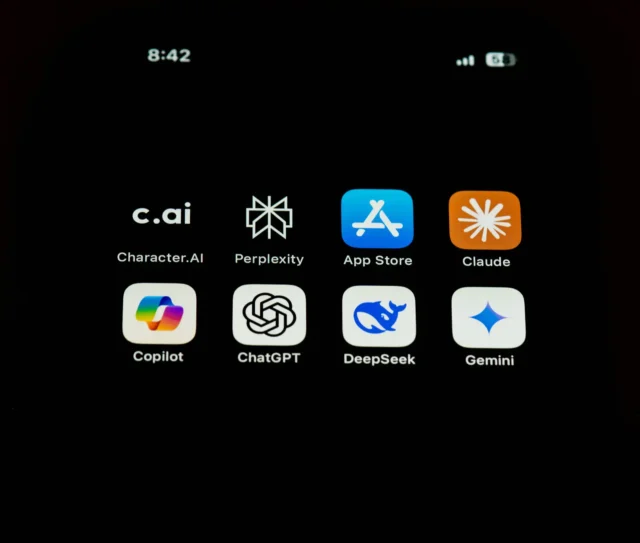
Another rising vector is that of shadow AI. Classic examples of security lapses include marketing teams uploading customer data into a public AI tool to generate campaign copy, or a junior developer vibe coding a web page and putting it on a domain’s front end wholesale.
Like with MFA, awareness programmes that explain these risks in concrete terms consistently reduce this behaviour. When people understand that AI prompts and uploads create the same exposure as sending files externally, they start to make different decisions.
Reporting culture matters as much as prevention
One of the most damaging patterns in security incidents is delayed reporting.
Employees notice something unusual, but hesitate to raise it. They worry about blame, disruption or being seen as overreacting. By the time the issue reaches IT or security teams, the window for simple containment has closed.
Organisations with strong awareness cultures normalise reporting. Staff are encouraged to flag concerns early, even when they are unsure. Security teams treat reports as signals, not failures. This shift has a measurable impact. Early reporting reduces dwell time, limits lateral movement and lowers the cost and severity of incidents.
In essence, employee awareness doesn’t replace technology in as much as it makes technology more effective. When staff understand why certain controls exist, they are less likely to work around them. When they recognise phishing patterns, fewer alerts escalate into incidents. When they understand data sensitivity, fewer files leave the environment unnoticed.
Security controls perform best when users themselves act as an early detection layer rather than an unpredictable variable.
Making awareness practical and durable
The most effective awareness programmes share a common approach:
- They are continuous rather than annual
- They use real examples drawn from the organisation’s own tools and workflows
- They focus on recognition and judgement rather than rigid rules
- They encourage discussion rather than silence
Most importantly, they are supported by systems that make safe behaviour easy. Managed devices, clear identity boundaries and well designed access controls reinforce what awareness teaches.
A Dr Logic perspective
At Dr Logic, we see employee awareness as a core security capability rather than a training requirement.
We work with organisations to embed awareness into everyday operations, alongside identity, device management and monitoring. That means helping teams recognise real threats in real situations and giving them the confidence to act early.
Technology sets the boundaries of what is possible. Awareness determines how safely people operate within them.
If you are investing heavily in security tools but still dealing with avoidable incidents, it may be time to focus on the human layer in a more deliberate way.
Talk to Dr Logic about building security that works with your workforce, not around it.