Artificial Intelligence isn’t just optimising spreadsheets; it’s transforming the very nature of digital warfare. Hackers are now using machine learning to create sophisticated, adaptive attacks, moving faster and stealthier than ever before. But AI is also the most powerful tool in the hands of defenders.
This article explores the new frontline of AI in cyber security battle, detailing how businesses can use defensive algorithms to fight fire with fire and secure their future.
The rise of AI-driven attacks
The speed and sophistication of cyber threats have accelerated exponentially, thanks to AI becoming accessible to criminal groups. Attackers are no longer limited to simple, static malware.
Why attackers now move faster and smarter
- Deepfake phishing: AI generates highly convincing email and voice impersonations, making traditional phishing education less effective.
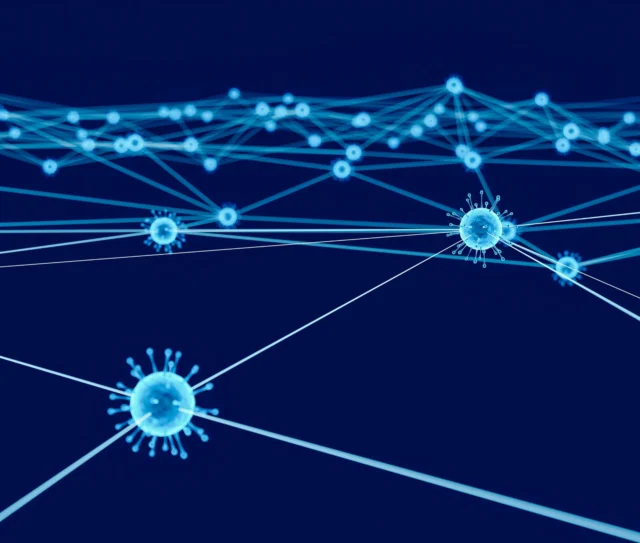
- Adaptive malware: Machine learning allows malware to study a victim’s network environment, adapting its code to evade detection and exploit new vulnerabilities in real-time.
- AI-based reconnaissance: Attack bots can efficiently scan vast enterprise networks, identifying the weakest link, whether it’s a misconfigured cloud service or a patch gap, in minutes, far quicker than human attackers.
The challenge is that human-based defence strategies can’t react quickly enough to these machine-speed threats.
We explore this in our article: Social Engineering 2.0: Deepfakes, AI Impersonation & the New Insider Threat.
Defensive AI – fighting fire with fire
To combat these evolving threats, cyber defence must adopt the same advanced technology. AI in cyber security shifts protection from reactive rules-based monitoring to proactive, predictive intelligence.
The power of predictive defence
- Behavioural analytics and anomaly detection: AI models learn the “normal” behaviour of every user, application, and device on your network. When a deviation occurs, even a subtle one, the system flags it instantly, catching insider threats or hijacked accounts before they do damage.
- Predictive threat modelling: AI analyses global threat intelligence data to anticipate new attack vectors, allowing your defences to be hardened before a zero-day vulnerability is exploited.
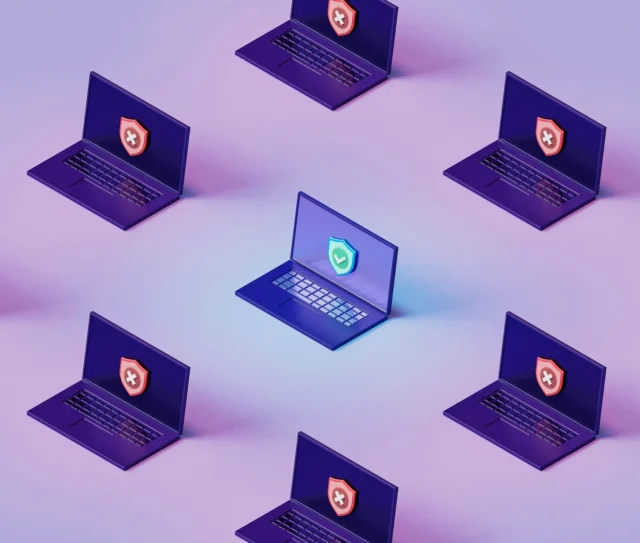
- Automated incident response (AIR): When a threat is detected, AI can instantly isolate the affected machine, quarantine the threat, and begin recovery without waiting for a human analyst to react, drastically reducing dwell time and damage.
The human-AI partnership in cyber defence
AI is a crucial tool, but it is not a replacement for human expertise, particularly in the complex, hybrid environments used by Dr Logic’s clients.
Why people remain critical
- Context and oversight: AI generates alerts, but human experts are needed to interpret the intent behind the anomalies. A security analyst understands the business context and can distinguish a genuine attack from a legitimate but unusual business operation.
- Strategic adaptation: While AI can counter known attack patterns, human IT strategists are essential for designing the overall security architecture, implementing Zero Trust principles, and proactively evolving the defence strategy.
- Tackling hybrid complexity: Managing the security integration across Apple, Windows, and multiple cloud platforms demands the judgment and deep expertise of human specialists to ensure seamless, compliant operation.
What SMEs can do now
You don’t need an army of security analysts to deploy advanced AI defence. You need a proactive partner.
- Adopt AI-driven SOC tools: Ensure your Security Operations Centre (SOC) tools use machine learning for continuous monitoring and rapid anomaly detection.
- Focus on proactive partnership: Partner with an IT as a Service (ITaaS) provider like Dr Logic. We offer continuous, AI-enabled threat monitoring and a cyber-first mindset built into every layer of your IT, allowing you to access state-of-the-art defence without the massive capital investment. We handle the complexity so you can operate confidently.
Get ahead of AI-powered threats with security that learns as fast as attackers do. Book a cyber health check.
Actionable takeaways
- Prioritise behavioural detection: Move beyond signature-based defence. Adopt systems that learn and flag unusual user/device behaviour.
- Don’t go it alone: Access enterprise-grade AI security by partnering with an ITaaS provider that builds security into your daily operation.
- Empower your people: Even with AI in place, ensure staff understand how to spot social engineering and deepfake threats.
Upgrade to AI-enabled cyber defence.
Book your cyber health check with Dr Logic.
Related articles
- Zero Trust Security: Why “Never Trust, Always Verify” Is the 2025 Cyber Security Mindset
- The Future of SOC: AI-Driven Threat Detection Explained
- When Hackers Come Knocking: Lessons from the BBC Insider Threat Attempt
FAQs
How is AI changing the nature of phishing attacks?
AI powers deepfake phishing and highly realistic social engineering, making attacks faster and harder to spot. Defence must shift from user training alone to using AI-driven anomaly detection tools to counter these convincing fakes.
Is AI replacing human security analysts?
No, AI is an assistant, handling high-volume detection and response. This frees expert human analysts for strategic threat hunting, complex problem-solving, and applying crucial business context – a critical human-AI partnership.
How can a small business afford AI-driven security tools?
By partnering with an ITaaS provider like Dr Logic. We offer access to enterprise-grade, AI-enabled SOC tools via a predictable monthly service fee, absorbing the capital and management costs for you.