If you have ordered a new MacBook recently and opened the box to find a cable but no charger, you have not been sent an incomplete order. The power adapter is simply no longer in the box. We have had two clients this week alone caught out by exactly this, both of whom received new MacBooks for setup without realising what had changed. This article explains why it is happening, why it applies to UK buyers just as much as EU ones, and what wattage charger you actually need for your model.
MacBook Pro and Air no longer include a power adapter as standard
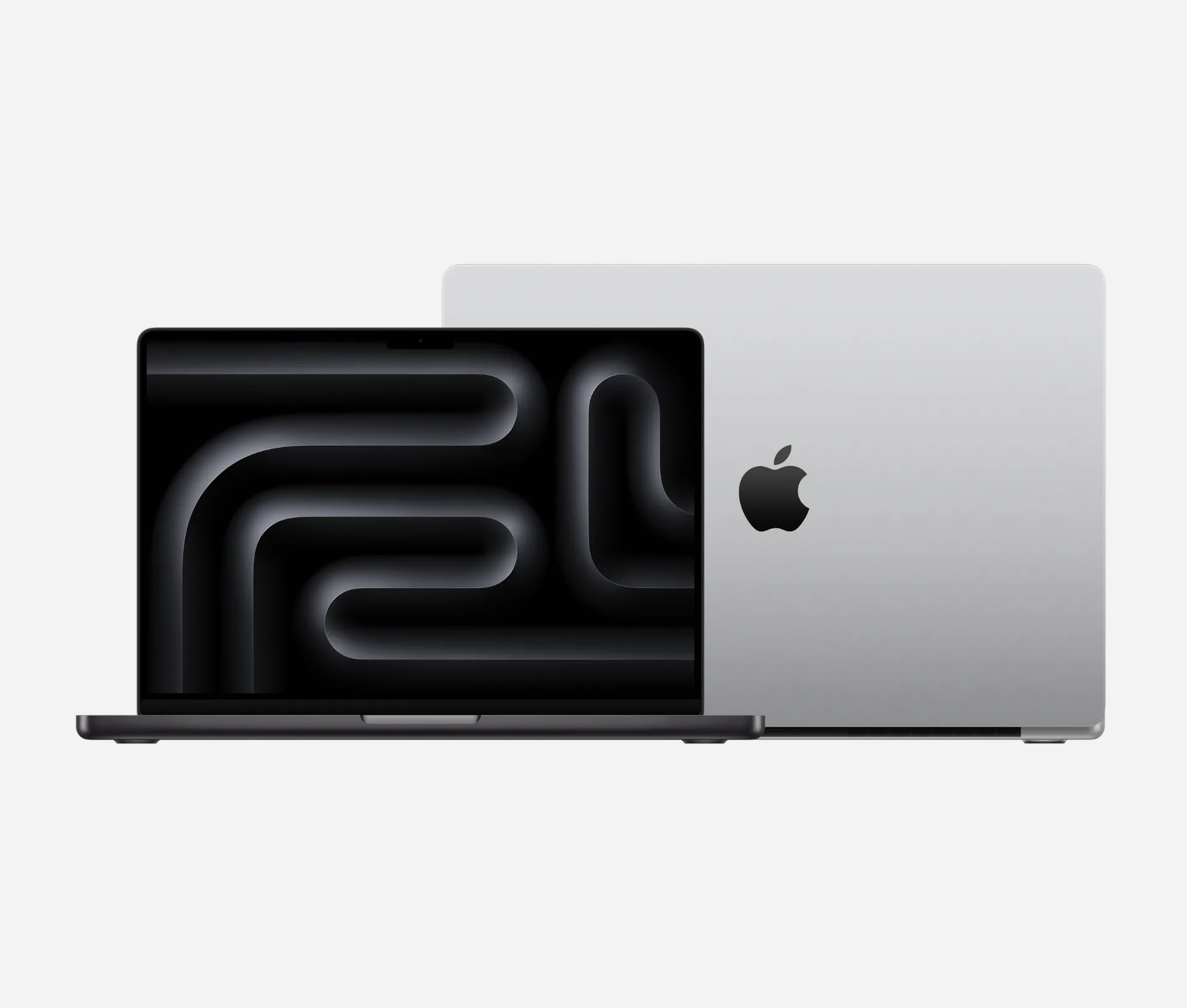
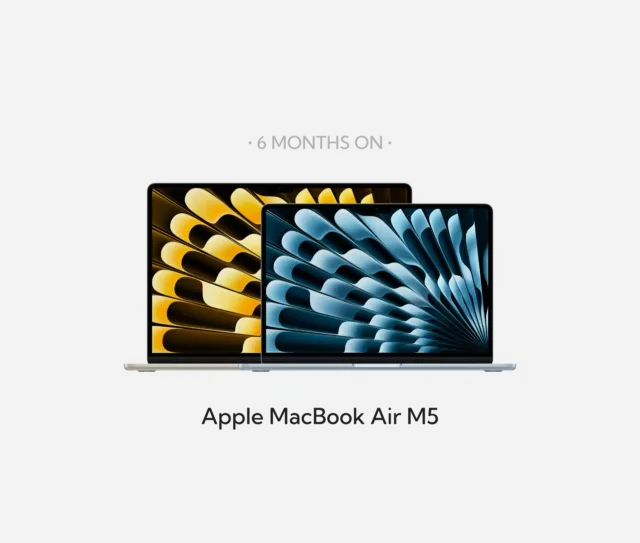
Both the M5 MacBook Pro (released October 2025) and the M5 MacBook Air (released March 2026) now ship without a power adapter in the UK. What you get in the box is the USB-C to MagSafe 3 cable. That is it.
Apple does offer a power adapter as an add-on at the configuration step on the Apple Store, available in four options to suit different models. It is easy to miss during a routine purchase, particularly when buying in bulk or through a reseller who does not flag the change. For businesses procuring several devices at once, the gap becomes apparent at setup rather than at the point of order.
The EU Common Charger Directive is the reason
The change is the direct result of Directive (EU) 2022/2380, the EU Common Charger Directive. Passed in October 2022, the directive has two core requirements for covered devices: USB-C must be present as a standard charging port, and manufacturers must offer devices in a configuration that does not include a bundled charger.
The rules have rolled out in phases. Since December 2024, they have applied to phones, tablets, cameras, headphones, keyboards, and a range of other portable electronics. Laptops joined the scope on 28 April 2026.
Apple made the charger-not-included configuration the default rather than an opt-in, following the same approach it took with the iPhone several years ago. The USB-C to MagSafe 3 cable remains in the box, but the power adapter must now be purchased separately.
UK buyers are covered by the same rules
The directive explicitly includes the UK within its scope, alongside Norway, Iceland, and Liechtenstein. This is not a case of manufacturers voluntarily following EU rules in a non-EU market. The UK is a named covered market under the directive, and the same requirements apply here as in EU member states.
Apple is not maintaining a separate UK product configuration. If you are ordering a new MacBook in the UK today, whether through apple.com, an Apple Authorised Reseller, or a managed procurement arrangement, you will not receive a power adapter unless you add one at the point of purchase.
Ever get the feeling your IT is holding you back?
Whether you’re looking to make your existing systems more efficient or are toying with the idea of a complete overhaul, Dr Logic is here to help.
It is not only Apple
This shift affects the entire laptop market, not just Apple. The Common Charger Directive is manufacturer-agnostic by design.
Dell, HP, and Lenovo have all introduced “without charger” purchase configurations for their laptop lines to meet the directive’s requirements. Microsoft’s Surface lineup has been through the same transition, with newer models moving to USB-C alongside the legacy Surface Connect port. Any laptop manufacturer selling into a covered market is making equivalent changes.
For businesses running mixed device fleets, the same principle applies across the board: do not assume a charger is in the box. Confirm what is included before any device reaches a user’s desk.
| MacBook Model | Standard Charging | Fast Charging |
|---|---|---|
| MacBook Neo (A18 Pro, 2026) | 20W USB-C | Up to 30W |
| MacBook Air M5 13" / 15" (2026) | 35W or 40W | 70W |
| MacBook Pro 16" M5 Pro / Max | 70W or 96W | 96W |
| MacBook Pro 14" M5 / Pro / Max | 96W | 140W (PD 3.1 required) |
One model-specific point worth noting: the MacBook Neo uses USB-C only. It has no MagSafe port. A MagSafe charger will not connect to it at all.
For the MacBook Pro 16-inch, fast charging at 140W requires a PD 3.1 certified charger and Apple’s own MagSafe 3 cable. Using a standard USB-C cable caps output at 100W regardless of the charger’s rated wattage.
Third-party chargers from established brands such as Anker or Ugreen are a sound alternative to Apple’s own adapters, typically at a lower price point. Avoid unbranded chargers: inconsistent power delivery is a genuine risk and can affect battery health over time.
What to check before your next MacBook purchase
Whether you are buying one device or twenty, these four checks will prevent a setup delay.
- Review the configuration step on the Apple Store before completing the order. The power adapter is listed as an add-on under Customisations. If you do not add it at that point, it will not arrive with the device.
- Match the wattage to the model. Use the table above as a quick reference. If you are unsure of the exact model being ordered, check with Dr Logic before purchase.
- If buying through a reseller, confirm the box contents explicitly. Not all resellers flag the change proactively, and it is not obvious from the external packaging.
- For fleet purchases, treat the charger as a separate line item. Budget for it at the procurement stage rather than discovering the gap at rollout. For larger orders, it is worth consolidating charger procurement to ensure consistency of wattage across similar device types.
If your business is procuring or deploying MacBooks and wants to make sure every device arrives configured and ready to use, talk to Dr Logic about managed Apple procurement and deployment.
FAQs
Do new MacBooks in the UK come with a charger?
No. As of the M5 MacBook Pro (October 2025) and M5 MacBook Air (March 2026), Apple no longer includes a power adapter in the box for UK buyers. The EU Common Charger Directive covers the UK as a named market, and Apple applies the same configuration here as in EU countries. You will receive the USB-C to MagSafe 3 cable, but the charger must be purchased separately.
Can I use any USB-C charger with a MacBook?
Yes, with caveats. Any USB-C charger that meets or exceeds your MacBook’s recommended wattage is safe to use. MacBooks only draw the power they need, so a higher-wattage charger will not cause damage. However, using a charger rated below the fast-charge threshold will result in slower charging speeds, particularly under load. Stick to chargers from reputable brands and avoid unbranded options.
What wattage charger do I need for a MacBook Air M5?
The MacBook Air M5 (both 13-inch and 15-inch) ships with a 35W or 40W adapter and supports fast charging with a 70W charger, which Apple states can take the battery from empty to 50% in approximately 30 minutes. For everyday office use, a 40W or 45W USB-C charger is sufficient. If you want fast-charge capability, a 70W GaN charger is the minimum.