Most businesses replace their Macs when something breaks or someone starts complaining that their machine is slow, which means the actual refresh strategy is reactive spending dressed up as IT management. The problem with waiting until a device feels old is that you’ve already absorbed the hidden costs by that point, declining performance, rising support tickets, missed trade-in windows, and the environmental impact of running hardware long past its efficient lifespan.
A proper Mac refresh strategy doesn’t start with specs. It starts with understanding when a device stops earning its keep, what it’s still worth on the secondary market, and how to time replacements so you’re spending less overall while keeping your team on hardware that actually performs.
Why the three-year cycle still makes sense
Apple Silicon has changed the longevity conversation. An M-series Mac holds its performance far longer than the Intel models it replaced, which has led some businesses to push refresh cycles out to five or even six years. On paper, that sounds like a saving, but in practice it usually costs more.
A MacBook Pro bought in 2023 and traded in after three years will retain roughly 40–50% of its original value. The same machine traded in after five years might retain 15–20%, which isn’t just a lower return – it’s a fundamentally different financial equation. The residual value at three years effectively subsidises the replacement, whereas at five years you’re funding the full cost of a new device with almost no offset.
Then there’s the support cost to consider. Older machines run slower, struggle with newer macOS features, and generate more IT support requests. AppleCare+ coverage typically expires after three years, and after that any hardware failure becomes an out-of-pocket repair or, more likely, an emergency replacement at full price with no planning lead time.
The three-year cycle isn’t arbitrary. It’s the point where residual value, support coverage, and performance intersect most favourably.
The four signals that a device is costing you more than you think
You don’t need a spreadsheet to spot the early warning signs. If any of these are showing up across your fleet, your refresh timing is probably off:
- Rising support tickets per device. When the same machines start generating repeated requests for slow performance, application crashes, or battery complaints, the cumulative IT support cost often exceeds the cost of simply replacing the device.
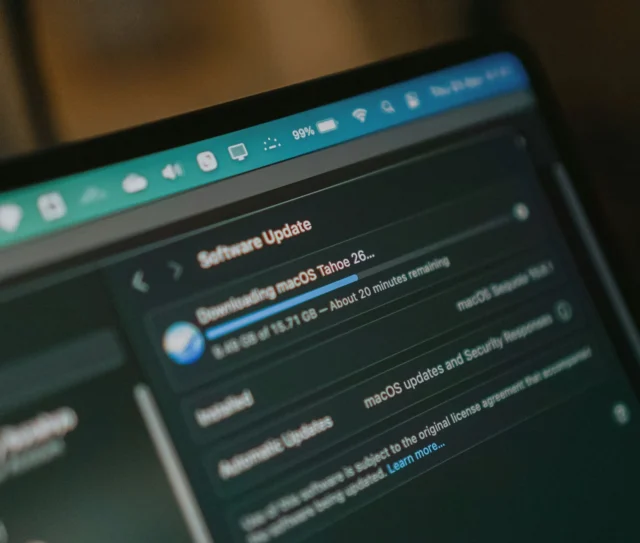
- macOS compatibility gaps. Apple typically supports macOS on a device for six to seven years after release, but newer features and security updates increasingly favour recent hardware. If a machine can’t run the latest macOS, it becomes a security liability as much as a productivity one.
- Battery health below 80%. macOS reports battery health in System Settings, and once a MacBook’s maximum capacity drops below 80%, users notice through shorter battery life and more time tethered to a charger. What starts as a minor inconvenience quickly escalates into urgent replacement requests rather than planned ones.
- Trade-in value dropping below 30%. This is the financial tipping point. Once a device’s trade-in value falls below roughly 30% of its original purchase price, you’ve moved past the window where replacement is partially self-funding, and every month you wait makes the economics worse.
Building a rolling refresh plan
The goal is to move from reactive replacement to a rolling, predictable cycle that your finance team can plan around and your IT lead can manage without firefighting.
Audit your current fleet.
Start with a full inventory covering model, purchase date, AppleCare+ status, current macOS version, and battery health. If you’re using an MDM solution like Jamf or Mosyle, most of this data is already being collected automatically. If you’re not, this is a strong reason to start.
Stagger your purchases.
Replacing every device in the same quarter creates a budget spike and a logistical headache. Dividing your fleet into cohorts and refreshing one group each year is far more manageable. A business with 30 Macs might replace 10 each year on a rolling three-year cycle, which smooths the cost and the workload considerably.
Lock in trade-in timing.
The single biggest mistake we see is leaving trade-ins until after the new device has arrived. By then, the old machine has sat in a drawer for weeks or months, losing value daily. Building trade-in into the refresh process so devices are returned within days of the replacement being deployed makes a significant difference to what you recover.
Discover How Apple’s Circular Economy Saves Your Business Money and Waste.
Align with Apple’s release cycle.
Apple typically refreshes its Mac lineup in the autumn, so planning your purchases shortly after a new release means your team gets the latest hardware and the device you’re trading in hasn’t yet been devalued by the arrival of its successor.
Factor in sustainability.
Every device that’s traded in and refurbished is one that doesn’t end up in landfill. A rolling refresh strategy naturally supports circular economy principles, particularly when you work with a partner who prioritises responsible trade-in and refurbishment rather than just disposal.
The spec sheet trap
It’s tempting to over-specify when refreshing. If you’re spending the money anyway, the logic goes, why not get the maxed-out model?
Because most of your team doesn’t need it. A base-model MacBook Air with M-series silicon handles email, browsers, Slack, Zoom, and standard business applications without breaking a sweat. The people who genuinely need a MacBook Pro with upgraded RAM and storage, developers, designers, video editors, are a smaller group than most businesses assume.
Right-sizing your specs at the point of purchase saves money upfront, maintains strong trade-in values since base models are easier to resell, and avoids paying for performance that sits unused for three years. The principle is straightforward: spec to the work, not to the job title.
Make your refresh strategy part of your IT strategy
A Mac refresh plan isn’t just an IT task. It’s a financial and sustainability decision that touches procurement, finance, and operations, and the businesses that handle it best treat it as part of their broader IT strategy rather than a series of isolated purchasing decisions.
If you’re running a Mac-first team and don’t have a documented refresh cycle, now is the time to build one. Our IT strategy and Apple specialists can help you audit your current fleet, model the financials of different refresh timelines, and set up a rolling plan that reduces cost, minimises waste, and keeps your team on hardware that performs.
Book a free fleet review with our Apple team →
Related articles
- Trade In, Don’t Throw Away: How Apple’s Circular Economy Saves Your Business Money and Waste
- Apple Business Manager: The Foundation of Scalable Apple Deployment
- Apple Business Is Here: What the New All-in-One Platform Means for Your Organisation
FAQs
How often should I replace Macs in a business environment?
A three-year refresh cycle offers the best balance of residual trade-in value, AppleCare+ coverage, and device performance. Apple Silicon Macs hold up well over this period, and trade-in values remain strong enough to meaningfully offset replacement costs.
Should I buy the highest-spec Mac for every employee?
No. Most business users are well served by a base-model MacBook Air with Apple Silicon. Over-specifying wastes the budget upfront and doesn’t significantly improve trade-in values. Reserve high-spec MacBook Pro models for roles that genuinely require the additional processing power, such as design or development.
Can I trade in Mac that are more than three years old?
Yes, though the return diminishes significantly after the three-year mark. Devices older than five years may still have some trade-in value, but it’s typically a fraction of the original cost. The sooner you trade in, the more you recover.