Most articles about switching from PC to Mac focus on keyboard shortcuts and how to find the Finder. That is not why business switches fail. They fail because the infrastructure was not ready: no MDM, no identity management, no plan for legacy Windows applications, and no support model that understands the platform. If you are a business decision-maker considering a fleet switch, this guide covers what actually needs to happen before, during, and after the move.
The short answer: switching to Mac is entirely viable for most UK businesses in 2026, and the operational and financial case is stronger than it has ever been. But the businesses that get it right do the groundwork first.
Why now? What has actually changed
SaaS maturity removed the compatibility barrier
For years, the most common reason businesses stayed on Windows was software. Proprietary tools, finance systems, and legacy applications were Windows-only, and switching meant losing access to the tools the business ran on. That argument has largely collapsed.
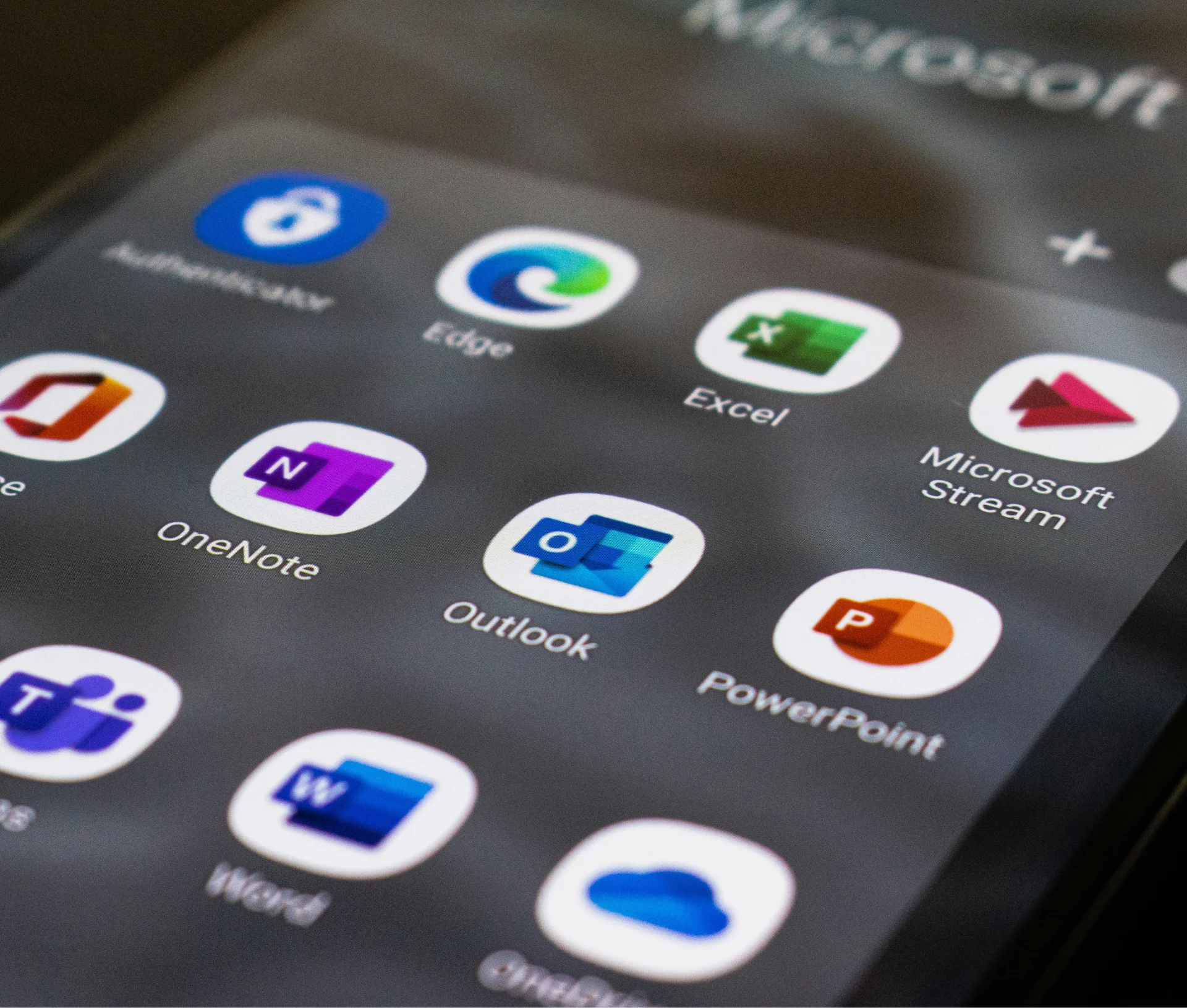
The shift to browser-based SaaS means the majority of core business tools now run identically on any platform. Microsoft 365, Google Workspace, Salesforce, Xero, HubSpot, Slack, Zoom: none of these care what operating system is underneath. For a document-heavy professional services firm, the question is no longer “will our software run?” but “are there any remaining Windows-only dependencies we need to plan for?”
Apple Silicon changes the performance conversation
Apple Silicon Macs, introduced in 2020 and now the standard across the entire Mac range, represent a meaningful step change in performance and battery life. For a business, this translates directly: staff working longer on battery, fewer thermal issues during intensive tasks, and a device that runs cooler and quieter in client-facing environments.
The IT overhead argument
A Forrester Total Economic Impact study commissioned by Apple (April 2024) found that businesses save an average of $843 per Mac over a three-year device lifecycle compared to equivalent Windows hardware. The study, which surveyed 242 hardware decision-makers across multiple industries, found an ROI of 186% on Mac deployments. The primary driver is not hardware cost but IT overhead: fewer support tickets, fewer security incidents, and lower admin burden per device.
In Dr Logic’s experience, the support overhead difference becomes most visible at the point of scale. The more devices in a fleet, the more the per-device support cost gap compounds.
Ever get the feeling your IT is holding you back?
Whether you’re looking to make your existing systems more efficient or are toying with the idea of a complete overhaul, Dr Logic is here to help.
Step 1: audit your Windows dependencies before you commit
How to identify applications with no Mac equivalent
The most common reason a Mac switch stalls or fails is discovering mid-migration that a business-critical tool has no Mac equivalent. The fix is a dependency audit before a single device is ordered.
Work through the following:
- List every application in active use across the business
- Identify which are browser-based (SaaS, no action needed)
- Identify which have a native Mac version (most major platforms do)
- Flag anything that is Windows-only, particularly any bespoke or industry-specific software
The third category is where most businesses find their surprises: a niche accountancy plug-in, a CRM built for Windows, or a legacy compliance tool that predates the SaaS era.
What to do with Legacy Windows-only software
For most Windows-only applications, one of three paths applies:
- A Mac-native or browser-based alternative exists and is the better choice anyway
- The application is infrequently used and can be accessed via a cloud Windows environment such as Windows 365
- The application needs to run locally, which where Parallels comes in
When Parallels is the answer and when it is not
Parallels Desktop 26 is the only Microsoft-authorised solution for running Windows 11 on Apple Silicon Macs. For most ARM-compatible Windows applications, it works well. For genuinely x86-only legacy software, x86 emulation exists, but it is currently in preview, and performance is limited.
Parallels is a viable workaround for one or two low-use legacy applications. It is not a strategy for a business whose core workflow depends on Windows software. If the dependency audit surfaces more than occasional Windows usage, that is a signal to either accelerate the migration to alternatives or reconsider the timeline.
Step 2: get your infrastructure right before the devices arrive
This is the section most businesses skip and most regret. Infrastructure decisions need to be made and configured before the first Mac ships.
Identity management: why a Managed Apple Account structure matters
Apple Business is the free platform Apple provides for managing Apple devices in an organisational context. It handles device enrolment, app distribution, and managed Apple Account creation. Before a Mac fleet arrives, your Apple Business setup needs to be in place, and your identity provider (Microsoft Entra ID, Google Workspace, or Okta) needs to be federated with it.
Without this, each device lands as a consumer device. You lose zero-touch deployment, you lose centralised management, and you create a significantly harder remediation problem later.
MDM: why zero-touch deployment changes everything about the switch experience
An MDM platform such as Jamf sits on top of Apple Business and handles the actual policy enforcement, configuration, app deployment, and compliance reporting. With MDM configured correctly before devices are ordered, what happens next is straightforward: a new Mac is ordered, shipped directly to an employee, powered on, connected to Wi-Fi, and automatically configured with every application, security policy, and access credential the role requires. No IT involvement. No imaging. No staged rollout process.
That is zero-touch deployment working as designed. It is the payoff for getting the infrastructure right in advance, and it transforms the switch experience from a logistical project into a procurement process.
Cloud storage and collaboration: Microsoft 365 on Mac is not quite the same as on Windows
Microsoft 365 works on Mac, but the experience is not identical. A small number of advanced features in Excel and Access are Windows-only. OneDrive sync behaviour can differ. Legacy macros built for the Windows version of Office may need testing. None of these are blockers, but they are worth checking during the dependency audit rather than discovering after go-live.
Step 3: procurement and deployment
Why buying through an Apple Authorised Reseller or Apple Technical Partner matters
Zero-touch deployment requires devices to be enrolled in Apple Business at the point of purchase, not after. This happens automatically when devices are ordered through an Apple Authorised Reseller or Apple Premium Technical Partner. Devices purchased through consumer channels or grey market resellers do not carry this enrolment, which means they cannot be zero-touch deployed and require manual configuration instead.
The difference in real terms: a device ordered through the right channel arrives at an employee’s desk ready to set up in under an hour. A device not ordered through the right channel requires an IT engineer to configure it before it leaves the building.
How devices can arrive pre-configured with zero IT involvement
Once Apple Business is configured and an MDM platform is in place, the deployment sequence looks like this:
- Device is ordered through an Apple Authorised Reseller or Apple Premium Technical Partner, pre-enrolled in Apple Business
- Device ships directly to the employee
- Employee powers on the device and signs in with their Managed Apple Account
- MDM pushes all required applications, security settings, and configurations automatically
- Employee is working within the hour
No IT engineer needs to touch the device at any point.
Planning the rollout: phased vs full fleet
For most businesses, a phased rollout reduces risk. Start with a pilot group of five to ten users, ideally a mix of technical confidence levels, and work through any unexpected dependencies or configuration issues before rolling out to the wider team. A full-fleet simultaneous switch is viable for smaller businesses with straightforward requirements, but a phased approach gives you a safety net.
Step 4: the employee transition
What training is actually needed and what is not
Most employees adapt to Mac faster than IT teams expect, particularly those already using an iPhone. The operating logic is familiar. The adjustment is primarily mechanical: different keyboard shortcuts, window management behaviour, and settings locations.
The training that actually helps covers:
- The most-used keyboard shortcuts (Command instead of Control, Spotlight for search)
- Window management (Mission Control, full-screen vs windowed)
- Finding and installing applications (the App Store, approved sources)
- Where settings live (System Settings, not Control Panel)
Full-day induction sessions are rarely necessary and often counterproductive. A two-page reference guide and access to support in the first week typically covers the gap.
The first 30 days: what support looks like
The first two weeks generate the highest volume of small questions. Most are resolved quickly. Proactive support in this window: a named contact for questions, a brief group walkthrough in week one, and a check-in at day 30 to surface anything outstanding. After 30 days, support request volume typically returns to baseline or below.
Common friction points and how to pre-empt them
The most common sources of friction in the first month are window management (Mac does not maximise windows the same way Windows does), keyboard shortcuts (particularly Cut, which works differently for files), and printer setup (which varies by printer model). Pre-empting these in the week-one walkthrough removes the majority of support tickets before they are raised.
Step 5: what to do with your Windows estate
Retiring Windows machines: disposal, resale and trade-in
Windows hardware approaching the end of life has limited resale value. Options include:
- Trade-in through Apple or an Apple Premium Technical Partner when ordering replacement hardware
- Resale through a certified IT asset disposal partner (with appropriate data destruction certification)
- Donation to charity through schemes such as Computer Aid International, subject to data sanitisation
Do not simply dispose of hardware without formal data destruction. GDPR obligations extend to decommissioned devices.
Running a temporary hybrid environment
During a phased rollout, some staff will be on Mac while others remain on Windows. Plan for this: ensure shared drives and collaboration tools are accessible from both platforms, confirm print infrastructure works across both, and assign clear timelines for when each team or role will complete the switch. Open-ended hybrid states tend to persist.
When Windows 10 end-of-life makes now the right moment
Windows 10 reached end of life in October 2025. Businesses still running Windows 10 devices are now operating hardware with no security updates from Microsoft. If a hardware refresh was already overdue, the timing aligns well: rather than replacing Windows hardware with new Windows hardware, a Mac fleet switch removes the next refresh cycle from the equation.
Do you need an Apple Technical Partner to manage this?
For a fleet under 20 devices with no legacy dependencies, no compliance requirements, and a technically confident internal resource, an internal-led switch is achievable. The groundwork is well-documented, and the tools are designed to reduce complexity.
For anything more involved: a larger fleet, compliance obligations such as Cyber Essentials or ISO 27001, remote teams, legacy application dependencies, or a business that simply does not have the internal IT capacity to absorb the project, an Apple Technical Partner will reduce risk and significantly shorten the timeline. The infrastructure setup, MDM configuration, zero-touch deployment workflow, and employee transition support are tasks that benefit from someone who has done it dozens of times.
Considering switching your fleet from PC to Mac? Dr Logic manages end-to-end Mac migrations for UK businesses. We will audit your current setup and tell you exactly what the switch requires.
Related articles
- The State of Apple in UK Business 2026
- Apple Blueprints: How to Configure Every Device in Your Business Before It Leaves the Box
- Apple Business Now Includes Free MDM: What It Does, What It Doesn’t, and When Your Business Needs Jamf
FAQs
How long does it take to switch a business from PC to Mac?How long does it take to switch a business from PC to Mac?
For a business of 20 to 50 staff with a prepared infrastructure, a phased switch typically takes four to eight weeks from initial audit to full deployment. The groundwork (Apple Business setup, MDM configuration, dependency resolution) takes the most time. Once infrastructure is in place, device deployment via zero-touch is fast.
Do Mac and Windows devices work together in a mixed environment?
Yes. Microsoft 365, Google Workspace, and most major business platforms work across both. File formats are compatible. Shared drives and collaboration tools function on both platforms. Running a temporary hybrid environment during a phased switch is straightforward, provided shared infrastructure has been confirmed to work on both platforms in advance.
Is Parallels a reliable way to run Windows applications on a Mac?
For most ARM-compatible Windows applications, yes. Parallels Desktop 26 is the only Microsoft-authorised solution for running Windows 11 on Apple Silicon Macs and works reliably for the majority of business applications. For legacy x86-only software, x86 emulation is in preview, and performance is limited. Parallels suits occasional Windows usage, not a business whose core workflow is Windows-dependent.