Apple spent the last week of October launching one product a day. It started with a new iPad mini on Monday, then a refreshed iMac and 14-inch MacBook Pro on Tuesday, and on Wednesday it finished with the first Mac you can touch: the MacBook Pro with PROLED XDR Display.
Everything ships on Friday 6 November, and pre-orders are already open. Planning a refresh before year-end? Here’s what’s new, what it costs in the UK and who each machine suits.
At a glance
| Product | Announced | UK starting price | Available |
|---|---|---|---|
| iPad mini (A20 Pro) | 26 October | £699 (Wi-Fi), £849 (cellular) | 6 November |
| iMac with M6 | 27 October | £1,499 | 6 November |
| 14-inch MacBook Pro with M6 | 27 October | £1,999 | 6 November |
| MacBook Pro with PROLED XDR Display | 28 October | £2,899 (14-inch), £3,399 (16-inch) | 6 November |
MacBook Pro with PROLED XDR Display
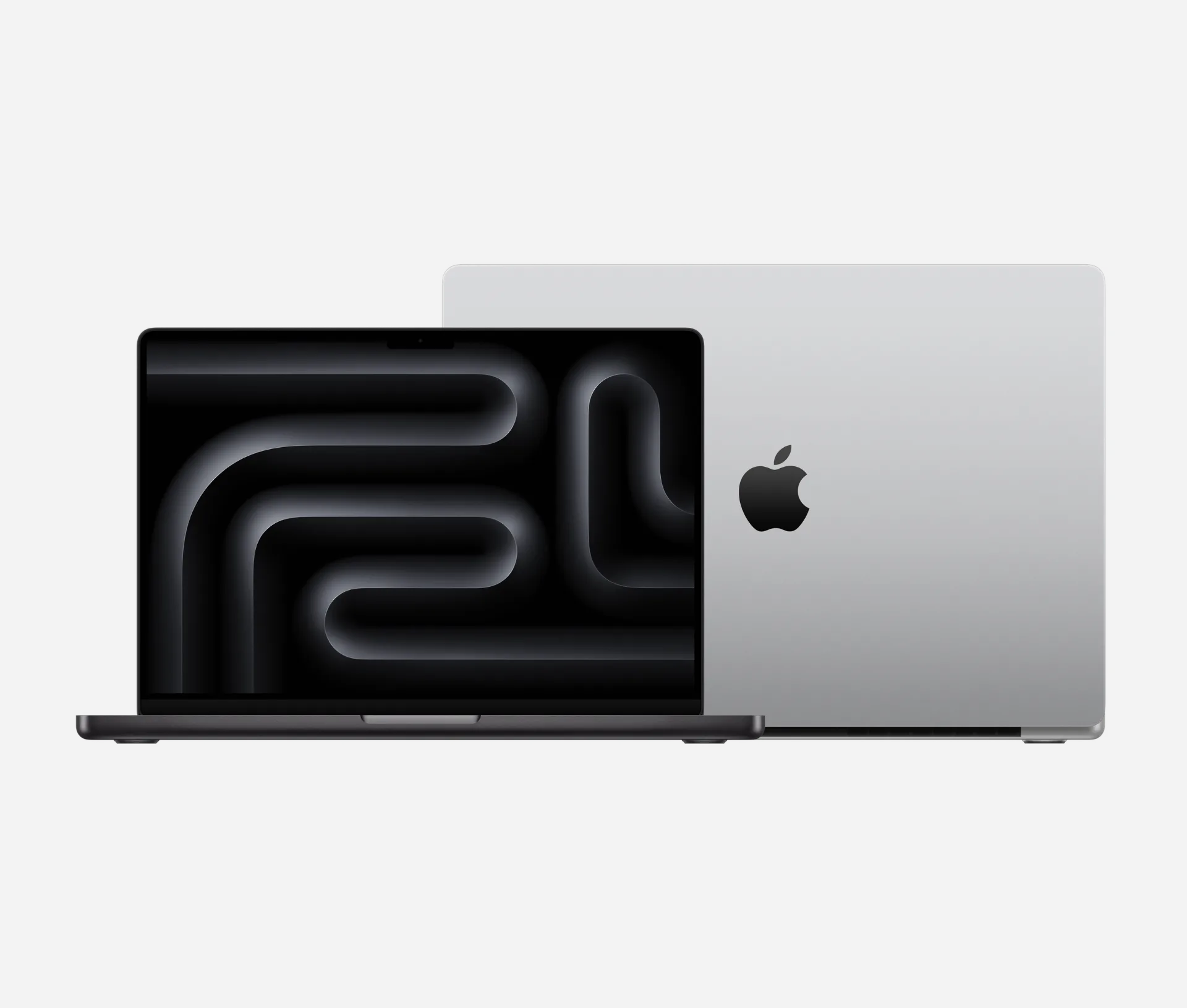
This is the headline launch. Apple has given its top MacBook Pro a tandem OLED screen and made it touch-sensitive, something it resisted for well over a decade. It comes in 14-inch and 16-inch sizes with M5 Pro or M5 Max chips, so it sits above the new M6 model in the range.
The display is the reason creative teams will look twice. It reaches 2,000 nits of peak brightness for both HDR and SDR content, covers both P3 and Adobe RGB, and runs at anything from 10Hz to 120Hz. Apple also includes a display calibrator and reference modes for film, photography and print work. For a colourist or retoucher, that’s close to carrying a reference monitor around in a bag.
Touch is built into the display panel itself. You can swipe to scroll, pinch to zoom, drag slides between presentations and double-tap a window to fill the screen. macOS treats a touch as a click, so most existing apps work from day one. Microsoft Word, Excel, PowerPoint and Outlook, Zoom, Notion, Canva, Lightroom and DaVinci Resolve are all getting dedicated touch support, though Apple says those updates arrive “later this year”. A new hinge stops the screen wobbling when you press it.
Other changes:
- Dynamic Island: replaces the notch and holds Spotlight, Live Activities and Siri AI
- Lighter design: around 1.36kg for the 14-inch and 1.81kg for the 16-inch
- Ports: three Thunderbolt 5, HDMI, SDXC, MagSafe and a headphone jack
- External displays: up to three with M5 Pro, four with M5 Max
- Memory and storage: up to 128GB unified memory and up to 16TB of storage
- Battery: up to 24 hours, with a 50% charge in 30 minutes
- Glowing Apple logo: back on the lid for the first time since 2015
M5 Max configurations start at £4,499 (14-inch) and £4,799 (16-inch).
Practitioner’s aside: Touch adds roughly £400 over an equivalent non-touch M5 Pro MacBook Pro. For designers, editors and anyone who presents from their laptop, it’s an easy case to make. For account managers and finance, it’s harder to justify.
14-inch MacBook Pro with M6
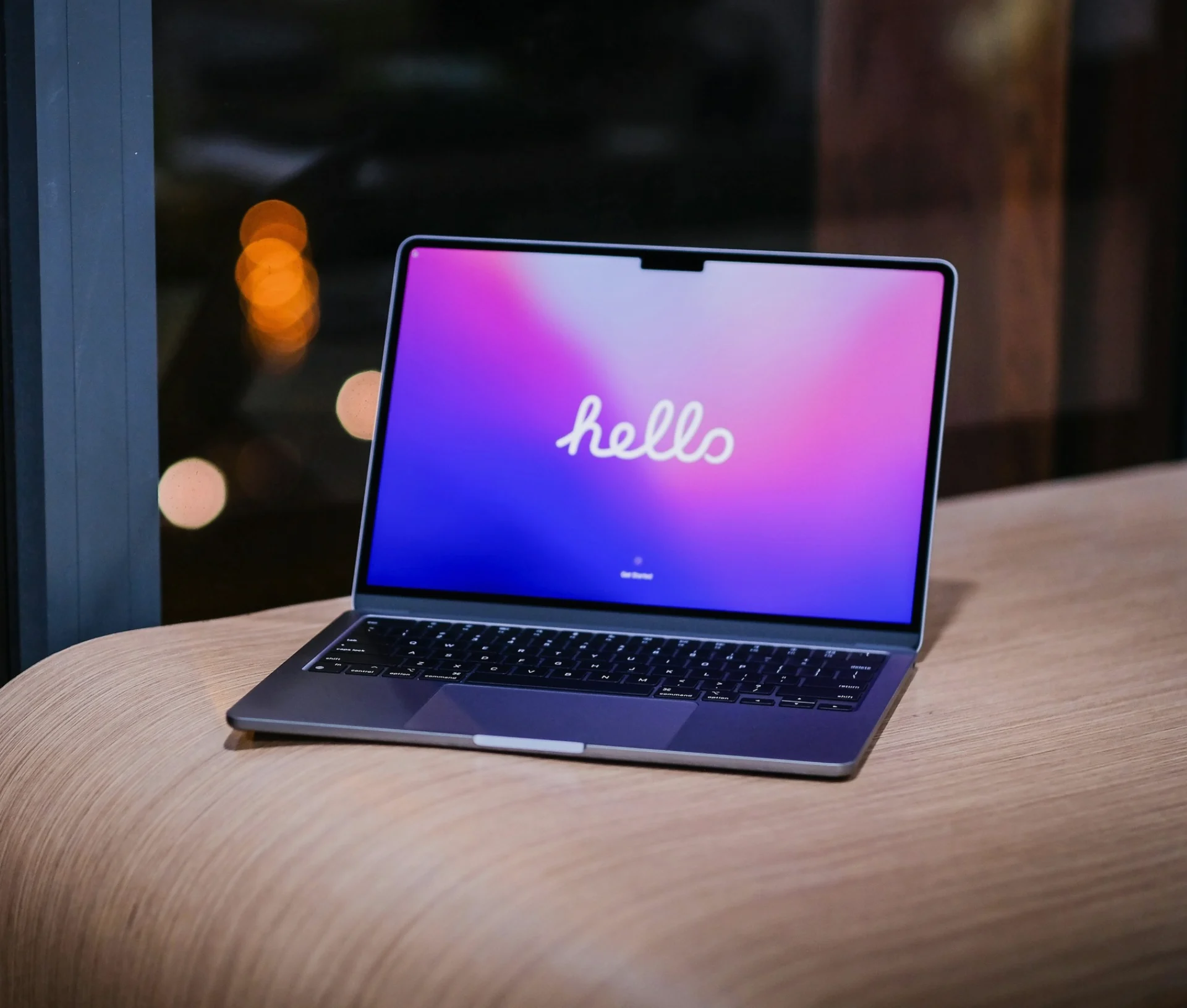
The new M6 chip arrives in the standard 14-inch MacBook Pro at the same £1,999 starting price. It has a 12-core CPU and 12-core GPU, two more cores of each than the M5 model. Apple quotes up to 30% faster graphics and up to 25% faster AI workloads compared with M5.
The rest is a steady update. You get Wi-Fi 7 and Bluetooth 6, 16GB of memory as standard (configurable to 32GB), up to 24 hours of battery life, and the existing Liquid Retina XDR display with an optional nano-texture finish.
If you’re ordering in bulk, remember this model maxes out at two external displays and uses Thunderbolt 4 rather than Thunderbolt 5. If your hot-desks use triple monitors or newer TB5 docks, try testing one on a desk before rolling them out across the company.
Rollout angle: Apple is pitching this model at people upgrading from M1 and Intel Macs, and they’ll notice the biggest jump. Anyone on an M4 or M5 MacBook Pro can usually wait for the next cycle.
iMac with M6
After two years without an update, the iMac gets the M6 chip. The design is unchanged: a 24-inch 4.5K Retina display, seven colours with matching accessories, and a 12MP Centre Stage camera.
There are two versions. The 10-core model starts at £1,499 with two Thunderbolt/USB 4 ports. The 12-core model starts at £1,699 and has four Thunderbolt 4 ports. Both get Wi-Fi 7 and Bluetooth 6 from Apple’s N1 chip, and you can now add a 2.5Gb Ethernet option. That’s useful if your studio moves large files over the wired network.
The iMac is still the tidiest option for reception desks and shared workstations. We’d lean towards the four-port model for anyone who connects drives and card readers every day.
iPad mini with A20 Pro
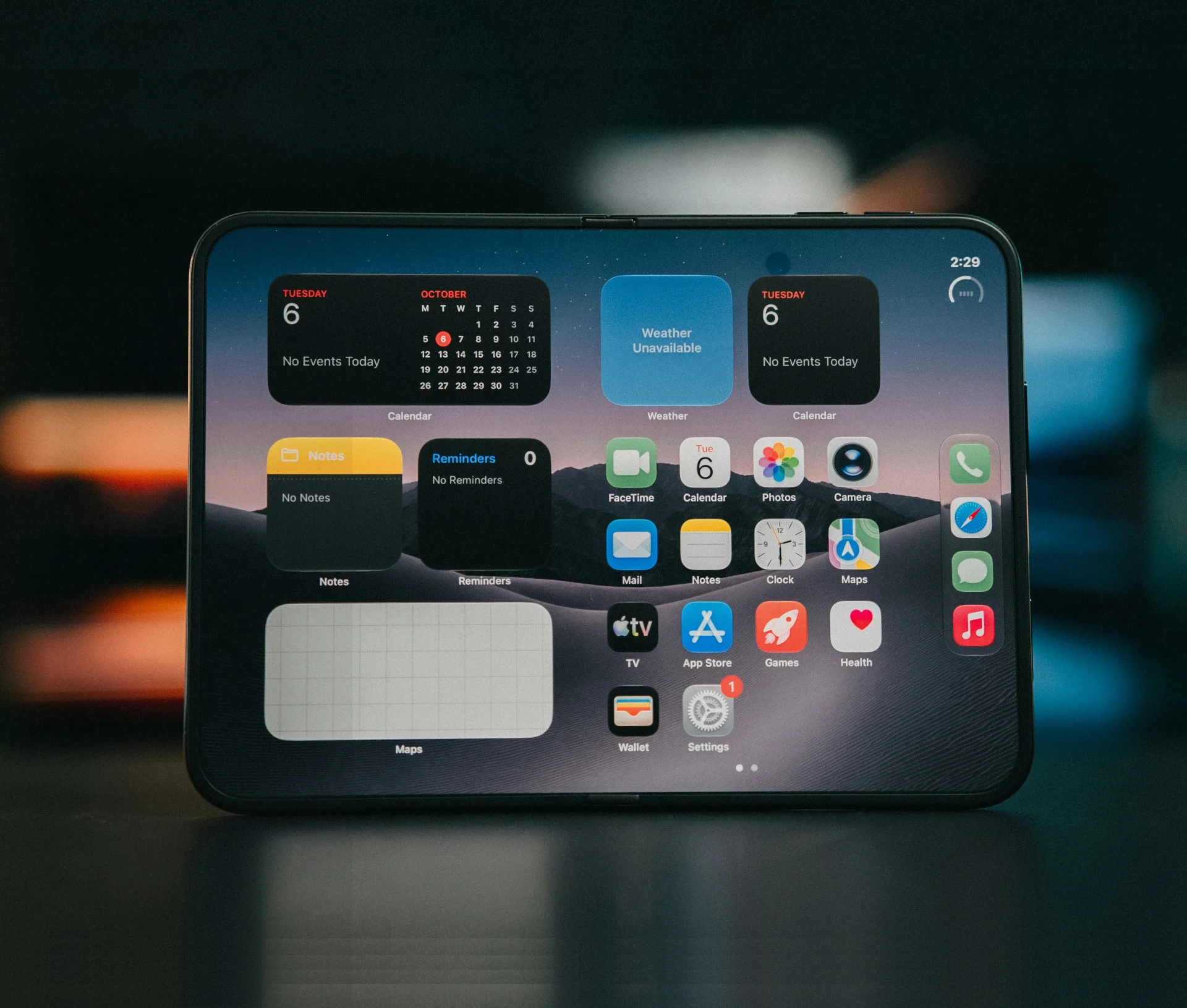
Apple called this the iPad mini’s biggest update ever. It gets a larger 8.5-inch OLED display, the A20 Pro chip (the same one in iPhone 18 Pro and iPhone Duo), and IP67 water and dust resistance for the first time. It’s thinner and lighter, and the front camera now sits on the long edge, so video calls work better with the iPad held sideways.
It now starts at £699 for Wi-Fi and £849 for cellular, £100 more than the previous model. A nano-texture glass option adds another £100 on the 256GB and 512GB models. It works with both Apple Pencil Pro and Apple Pencil (USB-C).
Durability angle: IP67 makes the mini a much better fit for site visits, events, retail floors and anyone who works outside an office. Enrol it in your DMS (formerly MDM) before you hand it out, so it’s set up and secured on arrival.
Software and services
Apple also updated Apple Creator Studio with new AI features and tools across Pixelmator Pro, Logic Pro and Final Cut Pro, including touch controls on the new MacBook Pro. Siri AI added more languages this week. It remains in beta on macOS 27.2, and some features rely on Apple’s server-side models with daily usage limits. Worth knowing before staff rely on it.
What this means for your business
Business impact: Pro and Tell gives Mac-first teams a clearer split. The M6 MacBook Pro becomes the default laptop for most staff. The PROLED touch model is for people whose work depends on colour accuracy or hands-on creative tools. The iMac covers fixed desks and shared spaces, and the iPad mini is the field device. The main change for IT leads is that you’ll probably be running two MacBook Pro display types side by side. That affects how you budget, how you set up docks and monitors, and how you configure touch and Siri AI settings in your device management platform.
In Dr Logic’s experience, the hardware is the easy part of a refresh. Planning who gets which machine, migrating data and keeping the fleet consistent is where the time goes. If you’re deciding which of these models fits each role in your team, we’re happy to help you plan it, from the shortlist to the day the new Macs arrive.
The short version
Apple released four new devices in three days, and all of them are available on 6 November. The touchscreen MacBook Pro with PROLED XDR Display (from £2,899) is the big one and is aimed squarely at creative pros. The M6 MacBook Pro (£1,999) and M6 iMac (£1,499) are solid upgrades at unchanged prices. The iPad mini (£699) gains OLED and water resistance, but it costs more than before.
Related articles
- Apple’s September 2026 announcements
- The Apple Business deployment checklist
- MacBook Neo: good enough for business?
FAQs
When can I buy the new touchscreen MacBook Pro in the UK?
Pre-orders opened on 28 October on Apple’s UK store and in the Apple Store app, and the first deliveries arrive on Friday 6 November. That’s the same date as the M6 MacBook Pro, M6 iMac and new iPad mini, so you can order a mixed batch for one delivery window.
How much does the touchscreen MacBook Pro cost compared with the M6 model?
The 14-inch MacBook Pro with PROLED XDR Display starts at £2,899, while the 14-inch M6 MacBook Pro starts at £1,999. The touch model also uses the more powerful M5 Pro chip, so you’re paying for performance as well as the display. Touch adds roughly £400 over an equivalent non-touch M5 Pro model.
Will our existing apps work with touch on the new MacBook Pro?
Most will, because macOS treats a touch as a click. Microsoft 365 apps, Zoom, Notion, Canva and several creative tools are getting dedicated touch support, but Apple says those updates arrive later this year. Your team can use the laptop normally from day one and get more out of touch as updates land.
Should we wait for M6 Pro or M6 Max MacBook Pros?
Apple hasn’t announced M6 Pro or M6 Max chips. Reports suggest it’s skipping them and moving to M7 Pro and M7 Max later. If your team needs a high-end MacBook Pro now, the M5 Pro and M5 Max models are the current top of the range. We’d plan around those and not wait.
Is the new iPad mini worth it for business use?
It’s a strong choice for people who work on the move. IP67 water and dust resistance, a brighter OLED screen and the A20 Pro chip make it tougher and faster than before. The trade-off is price: it now starts at £699, £100 more than the previous model.