Last updated: June 2026
The shift from expansion to optimisation, and what it means for forward-thinking businesses
For years, cloud strategy meant transformation: migrate fast, adopt SaaS at pace, enable hybrid work. That era is over.
In 2026, the question most business and IT leaders are asking is not “how do we move to the cloud?” It is “how do we make sense of what we’ve already built?” Digital ecosystems have matured. Tool sprawl is a real cost. AI has introduced a new layer of infrastructure spend that is harder to forecast than anything before it. The priority has shifted decisively toward simplification, integrating what exists, automating what is repetitive, and removing what is no longer earning its place.
This is where Dr Logic helps forward-thinking businesses get more from what they already have.
SaaS sprawl is now a financial and security problem
Businesses that embraced best-of-breed applications over the past five years now face a compounding problem: disjointed processes, siloed data, and tools that do not talk to each other. The result is duplicated effort, inconsistent information, and a security attack surface that is larger than most teams realise.
With 85% of IT decision-makers reporting that gaps in IT visibility pose a significant risk, the message is clear: you cannot protect what you cannot see. Unmanaged SaaS sprawl is not just inefficient, it is a liability.
The fix is not to add more tools. It is to audit what exists, consolidate where possible, and ensure the remaining stack is properly integrated. Dr Logic works with businesses to map their cloud use across departments, identify duplication, and build a leaner, more connected ecosystem.
AI has made cloud cost management more complex
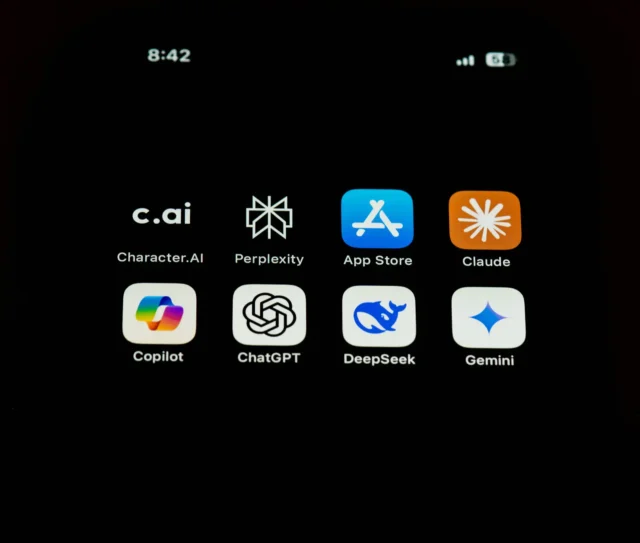
AI is no longer an experiment sitting outside core operations. AI and ML workloads now account for 22% of cloud costs for many organisations, and those costs are harder to forecast than traditional SaaS infrastructure, introducing non-linear patterns that break standard finance assumptions.
Cloud infrastructure spending is expected to grow by a further 27% in 2026, pushing total annual spending beyond $500 billion globally. For UK businesses, this translates directly into rising line items on cloud invoices, particularly for organisations that have begun embedding AI tools into workflows without a clear framework for monitoring consumption.
The cloud-at-any-cost era is over. After the major outages and rising costs of 2025, UK businesses are increasingly seeking financial governance over cloud spend, what practitioners call FinOps, alongside greater assurance about where their data is held.
FinOps is the practice of bringing financial accountability to cloud spending. It means tracking actual usage against projected costs, identifying idle or oversized resources, and making deliberate decisions about which workloads justify premium infrastructure. For most SMEs, the starting point is visibility: knowing what is being spent, on what, and whether it is delivering value.
What CIOs and IT leaders are prioritising in 2026
CIOs and digital leaders are no longer just technology buyers. They are the architects of connected, intelligent systems, and they are under pressure to deliver innovation while keeping environments secure, compliant, and cost-controlled.
Their priorities in 2026 include:
- Mapping and streamlining cloud use across departments to eliminate duplication and shadow IT
- Integrating existing tools rather than procuring new ones, making the stack work as a system, not a collection of point solutions
- Automating repetitive workflows to reduce manual effort and free up team capacity
- Governing AI spend with FinOps disciplines before costs outpace budgets
- Assessing supply chain and third-party risk, as cloud dependencies introduce vulnerabilities that extend well beyond internal systems
This is where Dr Logic delivers real impact, helping leaders design and implement automation strategies and integrated systems that improve agility without adding complexity.
Need a partner who understands complex digital environments? Learn about our hybrid IT support.
The barriers most organisations face
Knowing that simplification is the goal is one thing. Getting there is another. The most common obstacles Dr Logic encounters when working with businesses on cloud strategy include:
- Shadow IT: Teams adopt tools independently to solve immediate problems. Over time, unapproved applications accumulate, creating data handling risks and integration gaps that are difficult to unpick.
- Data silos: When platforms do not share data, teams make decisions from incomplete pictures. Finance works from one version of the truth, operations from another, and the discrepancy costs time and introduces error.
- Resistance to change: Familiar tools, however inefficient, are comfortable. Rationalising the stack almost always involves changing workflows that people have built habits around.
- Skill gaps: Effective integration and automation requires expertise that many internal IT teams do not have in-house. Building it takes time; buying it as a service is often faster and more cost-effective.
Working with a partner like Dr Logic means those barriers can be addressed with a structured approach, not piecemeal fixes.
Want to modernise workflows? Explore our digital innovation services.
Simplification is not the same as scaling back
A common misreading of the simplification trend is that it means doing less. It does not. It means doing more with what you have.
By connecting tools, automating handoffs, and removing duplication, businesses unlock capacity that was previously absorbed by manual processes and system-wrangling. Workflows that required intervention at every step can be automated end to end. Data that lived in separate platforms can be unified into a single view. Teams that spent time managing technology can redirect that time toward work that creates value.
The businesses seeing the strongest returns from their cloud environments in 2026 are not necessarily the ones with the most sophisticated stacks. They are the ones that know exactly what they have, why they have it, and how it all connects.
Curious about where AI fits in? Download our Practical Guide to Starting with AI in Your Business.
What to do next
If your cloud environment has grown faster than your ability to manage it, the most useful first step is an honest audit: what tools are in use, who is using them, what they cost, and whether they are integrated or isolated. That audit will surface the clearest opportunities for rationalisation and automation.
Dr Logic partners with businesses to work through exactly that process — and to implement the integrations, automations, and governance frameworks that turn a sprawling cloud estate into a streamlined, well-managed one.
Book a discovery call and see how we can help you design and implement modern integrations, automation solutions, and AI/ML strategies that help ambitious businesses move faster and scale smarter.
FAQs
What is the difference between cloud expansion and cloud optimisation?
Cloud expansion means adding more, more applications, more services, more functionality. Cloud optimisation means refining what already exists: connecting platforms, automating workflows, and removing duplication. In 2026, most businesses do not need more tools. They need the tools they already have to work better together.
What is FinOps and do SMEs need it?
FinOps is the practice of applying financial governance to cloud spending, tracking usage, identifying waste, and making deliberate trade-offs between cost, speed, and performance. It was originally associated with large enterprises, but as cloud costs rise and AI workloads introduce less predictable spending patterns, it is increasingly relevant for SMEs too. The starting point is visibility: knowing what is being spent and whether it is justified.
How do we tackle shadow IT without disrupting our teams?
Start with an audit rather than a crackdown. Understand why people adopted tools outside the approved stack, usually because the approved stack did not meet their needs quickly enough. Address the underlying need with a supported, integrated alternative, then migrate users across with proper training. Heavy-handed removal without a replacement creates resentment and drives the problem underground.
What challenges do CIOs face in cloud strategy?
CIOs are under pressure to deliver innovation while keeping systems secure, compliant, and cost-effective.
Common challenges include:
- Disconnected tools and siloed data
- Shadow IT creating governance risks
- Legacy systems that don’t integrate easily
- Teams resistant to new processes
- A shortage of in-house integration skills
We partner with CIOs to navigate these challenges – with a focus on simplifcation, automation, and long-term strategy, not just short-term fixes.
What's the difference between cloud expansion and optimisation?
Cloud expansion is about adding – more apps, more services, more functionality. Optimisation is about refining – connecting what you already have, automating workflows, and removing duplication.
In 2025, the shift is clear: businesses don’t need more tools. They need their tools to work better together. That’s where Dr Logic comes in – helping you optimise your cloud ecosystem to do more with less.