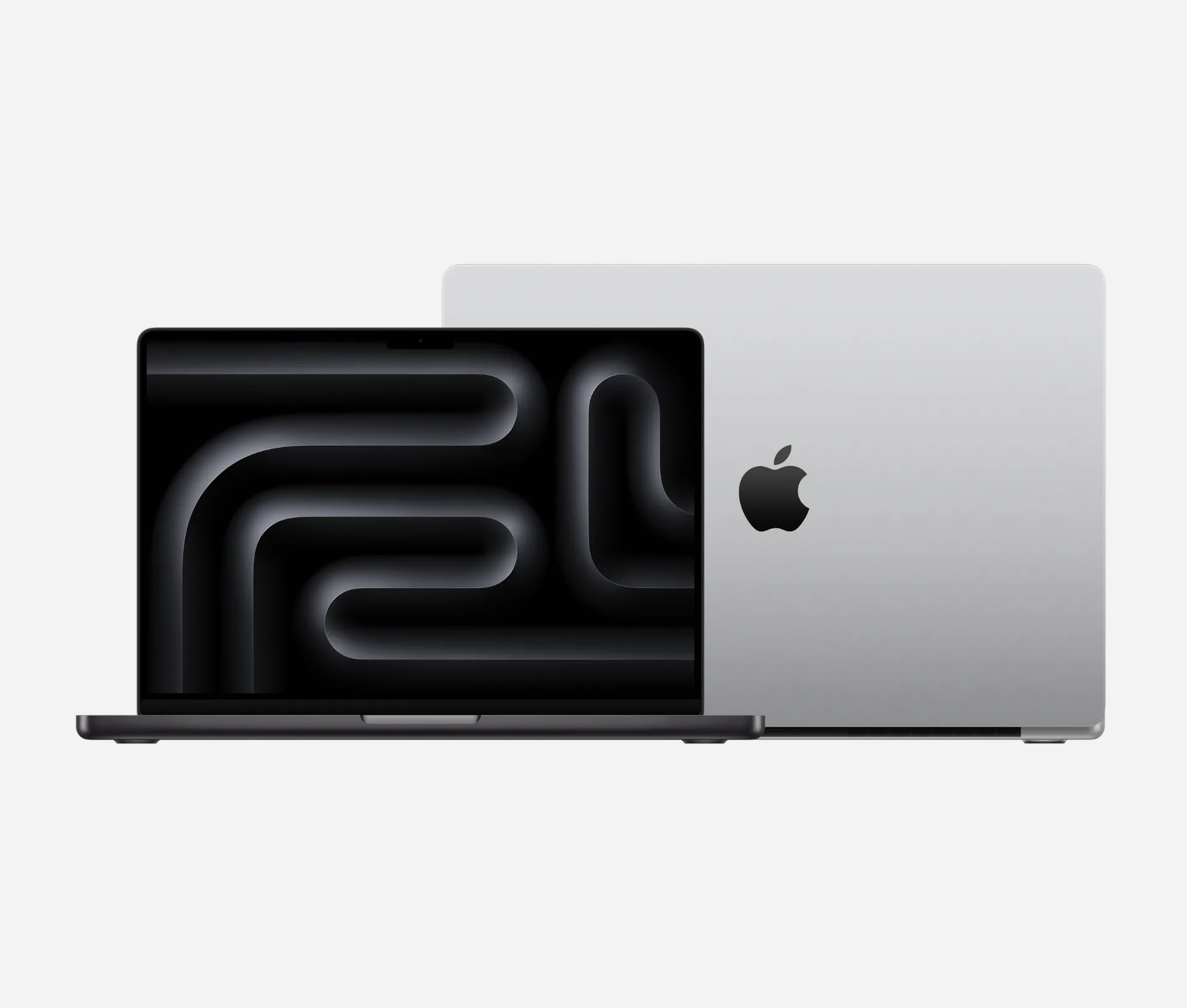
The move to M5 Silicon marks a shift from general processing speed to “Neural Intelligence,” allowing creative agencies to handle intensive AI tasks locally rather than through the cloud. This transition delivers a double benefit of drastically faster export times and improved client privacy, as sensitive assets remain securely on-device. For agencies managing 8K video or high-end 3D workflows, the M5 is no longer just an upgrade. It is a critical infrastructure investment to avoid the performance plateaus of legacy hardware.
Is your hardware keeping pace with your vision?
In the studios of Soho, the Northern Quarter, and Liverpool’s docklands, time is the only currency that matters. For years, the “render clock” has been an accepted tax on creativity, a forced break where machines whir, and humans wait.
The arrival of the M5 family, including the MacBook Pro and the updated Studio Display XDR, marks a shift in the landscape. We are no longer just talking about faster chips. We are seeing a complete re-architecture of how macOS handles the heavy lifting. For agencies managing 50 to 500 users, this isn’t just a hardware refresh; it’s a strategic shift to remove the technical friction that stalls growth.
GPU Neural Accelerators: The end of the ‘proxy’ era
Historically, the GPU handled the visuals while the Neural Engine managed the smart background tasks. With the M5, those lines have blurred. The new GPU Neural Accelerators are built specifically for the most demanding creative computations.
- Real-time 8K manipulation: Editing 8K ProRes raw footage used to mean relying on proxies. The M5 architecture handles these massive files with the same fluidity we used to expect from 1080p.
- 3D rendering without the wait: Hardware-accelerated ray tracing is now deeply integrated with AI-driven denoising. This means what you see in the viewport is almost identical to your final frame.
- Local AI, not cloud lag: As generative tools become standard, running these models locally rather than over the cloud gives studios a massive edge in speed and data privacy.
The lesson for studio leads is simple: when your hardware understands the work, your process becomes much more profitable.
Why Apple-native infrastructure matters
Simple isn’t easy; it’s earned. Many IT providers try to force Apple devices into Windows-style management systems. This usually results in “Frankenstein” setups where creative tools feel sluggish or disconnected.
True mastery of the Apple ecosystem means building an environment where the hardware and software speak the same language. We’ve refined our dedicated Apple services to ensure that your infrastructure is as high-performing as the machines your team uses. This approach delivers:
- Zero-touch deployment: Your team opens a box, signs in, and gets to work. No “IT days” wasted on setup.
- Unified fleet management: A clear, bird’s-eye view of every machine, ensuring they are all healthy and updated.
- Scalable architecture: Infrastructure that actually grows with you, handling the massive data output the M5 is capable of.
Professional IT standards should feel invisible, supporting your team rather than getting in their way.
The hidden cost of “making do” with legacy Silicon
M1 and M2 chips were revolutionary in their day, but the gap between those early models and the M5 is now vast. Using legacy hardware in a high-pressure creative environment is a silent drain on your business.
- The Talent Gap: The best creatives want to work with the best tools. Outdated hardware makes it harder to hire (and keep) top-tier talent.
- The Security Gap: Older machines lack the hardware-level security built into the latest Silicon. We believe in building secure from the ground up, using hardware that handles encryption natively.
- The Energy Gap: M5 performance-per-watt means you get massive compute power without the electricity bills or the distracting fan noise of older workstations.
Matching your network to your output
High-performance hardware is only as good as the pipes it’s connected to. If your team is churning out 8K files in record time, but your server or cloud storage is slow, you’ve simply moved the bottleneck further down the line.
Strategic planning means looking at the whole picture:
- High-speed networking: Ensuring your studio floor can actually move the data the M5 produces.
- Protection by default: Keeping those high-value assets safe without making them hard to access.
- Hybrid collaboration: Making sure your teams in different cities across the UK can work on the same files without version-control nightmares.
Key steps for studio leads
- Audit your render times: Find out which teams are losing more than an hour a day to processing tasks.
- Phase your upgrades: Start with your power users, e.g the video editors and 3D artists, to see the fastest return on investment.
- Check your infrastructure: Ensure your studio network and internet speeds can keep up with M5 throughput.
- Prioritise Apple-first support: Work with a partner who understands why a Creative Director’s workflow is different from an Accountant’s.
Technology built on real trust
Technology should make your work easier, not the other way around. At Dr Logic, we don’t just “fix Macs.” We act as a long-term partner for the UK’s most ambitious creative and financial firms. We simplify the complex, taking the stress of the M5 transition and turning it into a competitive advantage for your studio.
If you’re ready to stop watching the render clock and start focusing on your next big pitch, let’s have a real conversation about your strategy.
FAQs
Is the M5 upgrade worth it if we're already on M3 Max?
For standard design work, the M3 Max is still excellent. However, if you are pushing 8K video, complex 3D renders, or local AI models, the M5’s GPU Neural Accelerators provide a leap in real-time performance that genuinely changes the day-to-day workflow.
How do you handle a large-scale rollout without disrupting work?
We use zero-touch deployment. We pre-configure every device to your specific security and software needs before it reaches the user. It’s fast, secure, and doesn’t require a technician hovering over your desk.
Do you support studios outside of London?
Absolutely. We support creative firms in all major cities across the UK. We provide expert remote support backed up by on-site presence when it counts.