If you manage Apple devices in a UK business, the terminology moves fast. Apple Business replaced Apple Business Manager in April 2026. Declarative Device Management is now the default protocol for new features of DMS (Device Management Service, also known as MDM). Passkeys are an explicit Cyber Essentials v3.3 control. This glossary is built for the IT leads, business decision-makers, and operations teams who need plain-English definitions of Apple IT terms, written from the perspective of a Mac-first business in the UK.
Dr Logic has been working exclusively with Apple in business since 2003, and we hold Apple Premium Technical Partner status, the highest tier of Apple’s restructured Apple Partner Network. The definitions below reflect how these terms are actually used in UK Mac fleets, not how a US-centric vendor glossary defines them.
Use the category navigation below to jump to a section, or use Ctrl/Cmd+F to search for a specific term.
Apple Device Management Core
Apple Business
Apple Business is the unified Apple platform for business device management, launched in April 2026. It consolidated Apple Business Manager, Apple Business Essentials, and several other tools into a single free dashboard, with built-in mobile device management included for every UK business. See our Apple Business article for the full breakdown.
Apple Business Manager (ABM)
Apple Business Manager was Apple’s free web portal for enrolling devices, purchasing apps and books, and creating Managed Apple IDs. From April 2026 it was consolidated into the broader Apple Business platform, though many in the industry still use ABM as shorthand for the enrolment and procurement functions specifically.
Apple School Manager (ASM)
Apple School Manager is the education equivalent of Apple Business, designed for schools, colleges, and universities. It includes Shared iPad support, Classroom and Schoolwork integration, and Managed Apple IDs for students and staff. UK academies and multi-academy trusts commonly run ASM alongside a third-party mobile device manager (MDM) such as Jamf School.
Apple Configurator
Apple Configurator is Apple’s free Mac and iPhone app for bulk configuring iPhone, iPad, Apple TV, and Mac devices via direct USB connection. It is most commonly used for adding devices to Apple Business after the fact, restoring iPad kiosks, and preparing single-purpose devices that bypass standard MDM enrolment.
Apple Device Enrolment (ADE)
Apple Device Enrolment, formerly Device Enrolment Program (DEP), is the process by which devices purchased through Apple or an Apple Authorised Reseller are automatically assigned to a business’s device manager during setup. ADE is what makes zero-touch deployment possible. The Dr Logic team treats ADE coverage as a non-negotiable for any new Mac procurement.
Apple Push Notification service (APNs)
Apple Push Notification service is the secure communication channel Apple uses to deliver commands from an MDM server to a managed Apple device. Every push, restriction, app install, and remote wipe command from an MDM is delivered via APNs. If APNs is blocked at network level, MDM stops working.
Automated Device Enrolment
Automated Device Enrolment is the current Apple terminology for the same process previously known as DEP, now part of Apple Device Enrolment (ADE) in Apple Business. The two terms are used interchangeably, though Apple’s current documentation favours “Automated Device Enrolment”.
Bring Your Own Device (BYOD) for Apple
Bring Your Own Device for Apple refers to staff using personally-owned iPhones, iPads, or Macs to access company data and apps. On Apple, BYOD is handled via User Enrolment, which separates work and personal data on the same device. Cyber Essentials v3.3 brings personal devices firmly in scope.
Company-Owned Personally Enabled (COPE)
Company-Owned Personally Enabled describes a deployment model where the business owns the device but the employee uses it for both work and personal purposes. On Apple, COPE is the most common model for issuing iPhones to staff and gives IT supervisory control while still allowing personal use under acceptable use policies.
Declarative Device Management (DDM)
Declarative Device Management is Apple’s modern DMS (Device Management Service) protocol, introduced in 2021 and now the default for new features. Unlike traditional MDM where the server pushes commands to a device, DDM allows the device itself to apply policies autonomously and report status changes. From 2026, most new Apple DMS features are DDM-first.
Device Enrolment Program (DEP)
Device Enrolment Program is the legacy term for what is now called Apple Device Enrolment or Automated Device Enrolment, the process of assigning purchased devices to a business MDM automatically. DEP is still widely used in conversation but Apple no longer uses the term in current documentation.
Managed Apple ID
A Managed Apple ID is a business-owned Apple ID created and controlled by an organisation through Apple Business, rather than a personal Apple ID. Managed Apple IDs let businesses control iCloud Drive, Notes, Reminders, and Continuity features for staff while retaining account ownership when employees leave.
DMS (formerly MDM)
Mobile Device Management is former name of Apple’s framework for businesses to remotely configure, secure, and manage iPhone, iPad, Mac, and Apple TV. Now known as DMS (Device Management Service), it is the foundation of every business Apple deployment. From April 2026, Apple includes a free basic DMS in Apple Business, with third-party platforms like Jamf Pro layered on top where deeper functionality is needed. The term MDM has since been depreciated from an Apple standpoint, but still remains in common parlance and can refer to similar, non-Apple device management services.
Profile Manager
Profile Manager is Apple’s legacy DMS solution, originally part of macOS Server. Apple discontinued macOS Server in 2022 and Profile Manager is no longer supported for new deployments. Any business still running Profile Manager should migrate to Apple Business or a third-party MDM.
Supervised Mode
Supervised Mode is the higher-privilege management state available to company-owned Apple devices enrolled through Apple Device Enrolment. Supervised devices accept restrictions and configurations that unsupervised devices reject, including app allow listing, web filtering, and the ability to silently install apps. All business-owned iPhones and iPads should be supervised.
User Enrolment
User Enrolment is Apple’s privacy-preserving DMS mode designed for BYOD. It separates work data into an encrypted volume on personal devices and limits what IT can see and control. The employee’s personal data, photos, and apps remain invisible to the business. User Enrolment is the right model for personal devices accessing company email.
Volume Purchase Program (VPP)
Volume Purchase Program was Apple’s legacy system for buying and distributing apps and books in bulk to managed devices. VPP was rolled into Apple Business Manager in 2019 and is now simply called Apps and Books within Apple Business. The term VPP is still in common use in the industry.
Zero-touch Deployment
Zero-touch deployment is the process of shipping a Mac, iPhone, or iPad directly to an employee, who powers it on and finds it already enrolled in the company’s MDM with apps, settings, and security policies applied automatically. It requires devices purchased through Apple Direct or an Apple Authorised Reseller with Apple Device Enrolment configured.
MDM/DMS Platforms and Vendors
Addigy
Addigy is a cloud-based Apple device management platform designed for managed service providers and smaller IT teams. Its strength is simplicity and a flat monthly per-device cost. Dr Logic finds Addigy best suited to fleets under 50 Macs where a lighter-touch management approach is preferred over the depth of Jamf Pro.
Fleet
Fleet is an open-source device management platform built on osquery, supporting Mac, Windows, Linux, and ChromeOS. It is more commonly used by engineering-led organisations with the internal expertise to self-host and customise. Most UK Mac-first businesses default to Apple DMS rather than Fleet.
Hexnode
Hexnode is a cross-platform Unified Endpoint Management (UEM) provider supporting Apple alongside Windows, Android, and ChromeOS. It is most often chosen by businesses that need a single platform across mixed estates. For Apple-only deployments, dedicated Apple DMS typically offer deeper macOS and iOS feature support.
Intune for Apple devices
Intune is Microsoft’s cloud-based device management platform, part of Microsoft 365. It supports Apple devices via DMS enrolment and integrates tightly with Entra ID and Conditional Access. Intune handles iPhone management reasonably well but is widely regarded as weaker than dedicated Apple DMS for deeper macOS configuration.
Jamf Now
Jamf Now is the simpler, lower-cost MDM product from Jamf, aimed at smaller fleets and businesses without dedicated IT staff. It covers the essentials: enrolment, app deployment, basic policy management. Businesses outgrowing Jamf Now typically migrate to Jamf Pro rather than to a competing platform.
Jamf Pro
Jamf Pro is the most widely deployed enterprise Apple MDM platform globally and the default choice for Apple-first organisations above around 50 devices. It offers the deepest macOS and iOS configuration options, the largest community, and the broadest integration ecosystem. Dr Logic recommends Jamf Pro as the strongest fit for medium and large UK Mac fleets where depth of control matters.
Jamf School
Jamf School is the education-focused version of Jamf, designed around classroom management, shared iPad workflows, and Apple School Manager integration. It is widely deployed across UK schools and academy trusts. The business-equivalent product is Jamf Pro, not Jamf School.
JumpCloud
JumpCloud is a cloud directory and device management platform that includes Apple DMS capabilities alongside identity, SSO, and cross-platform management. It is most often selected by businesses that want directory services and MDM from a single vendor rather than running a dedicated Apple DMS separately.
Kandji
Kandji is a modern, design-led Apple MDM platform that has grown rapidly since launch. Its strengths are the polished interface, pre-built Library Items for common configurations, and strong macOS automation. Dr Logic finds Kandji a strong fit for growing Mac-first businesses that want a more current, automated feel than Jamf Pro’s traditional interface.
Meraki Systems Manager
Meraki Systems Manager is Cisco’s cloud-managed MDM, included with Meraki networking subscriptions. It is most often used in businesses already running Meraki firewalls and access points who want a single dashboard. Feature depth on macOS is limited compared with dedicated Apple DMS.
Microsoft Intune
See Intune for Apple devices. Microsoft Intune is the formal product name and is used interchangeably with Intune in common usage.
Mosyle Business
Mosyle Business is an Apple-only MDM platform that bundles MDM, identity, endpoint security, and application management into a single per-user subscription. Dr Logic considers Mosyle Business a strong all-in-one option for SMB Mac fleets where consolidating spend across MDM, identity, and security tools is a priority.
Mosyle Manager
Mosyle Manager is Mosyle’s education product, the equivalent of Jamf School in scope and target market. It is used by schools and educational institutions that want bundled MDM, identity, and security for Apple classroom deployments.
SimpleMDM
SimpleMDM is a lightweight Apple MDM platform aimed at smaller IT teams and managed service providers. It offers per-device pricing with no minimum commitments. Its target market overlaps with Jamf Now and Addigy. SimpleMDM is less commonly seen in larger UK deployments.
Workspace ONE
Workspace ONE is the unified endpoint management platform from Omnissa, formerly VMware. It supports Apple alongside Windows, Android, and ChromeOS and is most commonly seen in large enterprises with existing VMware infrastructure. For Apple-first deployments outside of enterprise scale, dedicated Apple DMS is typically the better fit.
Apple Security and Privacy
Activation Lock
Activation Lock is the Apple feature that ties a device to its owner’s Apple ID, preventing the device from being erased and reactivated without the original credentials. On business-owned devices, Activation Lock should be managed centrally through Apple Business to avoid devices being locked to ex-employee Apple IDs.
Advanced Data Protection (iCloud)
Advanced Data Protection is an opt-in iCloud security setting that applies end-to-end encryption to most iCloud data, including iCloud Drive, Photos, Notes, Backup, and Reminders. With ADP enabled, Apple itself cannot access the encrypted data. ADP availability for UK users was disabled in February 2025 following a UK government order.
App Sandbox
App Sandbox is the macOS and iOS security mechanism that confines apps to a restricted set of resources, preventing them from accessing user data or system resources without explicit permission. All Mac App Store apps are sandboxed. Sandboxing is a foundational layer of Apple’s defence-in-depth security model.
Differential Privacy
Differential Privacy is the statistical technique Apple uses to collect aggregate user data without identifying any individual user. It is applied to Spotlight suggestions, Safari intelligent tracking prevention, and various Apple Intelligence training inputs. It is rarely encountered directly by IT teams but underpins much of Apple’s privacy positioning.
Endpoint Detection and Response (EDR) on Mac
Endpoint Detection and Response on Mac refers to security tools that monitor Mac endpoints for threats and provide forensic visibility into incidents. Common Mac-capable EDR platforms include SentinelOne, CrowdStrike Falcon, Jamf Protect, and Huntress. Cyber Essentials v3.3 brings sharpened expectations around malware protection that EDR helps satisfy. See our Cyber Security service page.
FileVault
FileVault is the full-disk encryption built into macOS. It encrypts the entire startup volume using XTS-AES-128 with a 256-bit key, so data is unreadable if the device is lost or stolen. FileVault is one of the most important security baselines for any business Mac and is a Cyber Essentials requirement.
Find My (Apple)
Find My is Apple’s combined service for locating lost Apple devices and personal items via AirTag. The business-relevant feature is Find My iPhone and Find My Mac, which can be managed centrally through Apple Business. Find My should be configured carefully on managed devices to avoid Activation Lock complications.
Gatekeeper
Gatekeeper is the macOS feature that verifies downloaded apps are signed by an identified developer and have been notarised by Apple before allowing them to run. It is one of the layers that protects Mac users from malware delivered via downloads. Gatekeeper settings can be managed through DMS.
Hardware Security Module (Apple Secure Enclave)
See Secure Enclave. Apple’s hardware security module is branded as the Secure Enclave and is the term Apple uses in current documentation.
iCloud Keychain
iCloud Keychain is Apple’s built-in password manager, syncing passwords, passkeys, and credit card details across a user’s Apple devices via iCloud. It is end-to-end encrypted. For business use, Dr Logic recommends a dedicated business password manager (1Password, Bitwarden) rather than iCloud Keychain for shared credentials.
iCloud Private Relay
iCloud Private Relay is an iCloud+ feature that encrypts and routes Safari traffic through two separate relays so neither Apple nor the destination website can see a user’s full IP address and browsing history together. It can interfere with corporate web filtering and is often disabled on managed devices via DMS.
Lockdown Mode
Lockdown Mode is an extreme protective setting in iOS, iPadOS, and macOS that disables a wide range of features to reduce attack surface for users at risk of targeted attacks. It is rarely needed across a general workforce but is relevant for journalists, activists, and senior executives in high-risk industries.
Notarization (macOS)
Notarization is Apple’s automated process for scanning Developer ID-signed apps for malicious content before they are distributed outside the App Store. macOS Gatekeeper blocks any non-App Store app that has not been notarised. From a business IT perspective, notarisation is one of the reasons Mac malware remains rare.
Passkeys
Passkeys are a passwordless authentication standard built on public-key cryptography, replacing passwords with cryptographic key pairs stored in Apple’s Secure Enclave. They are phishing-resistant, cannot be reused or leaked in breaches, and are explicitly favoured in Cyber Essentials v3.3 as a more secure alternative to passwords with MFA.
Platform Single Sign-On (Platform SSO)
Platform Single Sign-On is the macOS framework that lets a Mac sign in to a third-party identity provider (Okta, Microsoft Entra ID) at the login window, with the Mac account password staying in sync with the cloud identity. It removes the need for legacy directory binding and is Apple’s modern replacement for Active Directory binding.
Privacy Manifest
Privacy Manifest is the file Apple requires app developers to include with their apps, declaring the data they collect, the reasons for collecting it, and the APIs they use. It is more relevant to developers than to IT teams but is part of why Apple’s app review remains stricter than Android’s.
Rapid Security Response (RSR)
Rapid Security Response is the Apple update mechanism for delivering critical security fixes to iOS, iPadOS, and macOS faster than the standard release cycle, without requiring a full OS update. RSRs install automatically by default and can be managed via DMS. They are designated with a letter suffix, for example 26.4.1 (a).
Secure Enclave
The Secure Enclave is the dedicated security coprocessor built into every Apple silicon Mac, iPhone, and iPad. It handles biometric authentication (Touch ID, Face ID), passkey storage, FileVault keys, and Apple Pay tokens, isolated from the main processor. It is the hardware foundation of Apple’s security model.
Sign in with Apple
Sign in with Apple is Apple’s privacy-preserving identity provider for third-party apps and websites, letting users sign in with their Apple ID and optionally hide their real email behind a relay address. It is consumer-focused but is increasingly accepted as a sign-in option for SaaS tools used by smaller businesses.
System Integrity Protection (SIP)
System Integrity Protection is the macOS feature that prevents even an administrator user from modifying protected system files and processes. Disabling SIP requires booting into Recovery Mode. It should never be disabled on a managed business Mac, and any tool that requires SIP to be disabled should be treated with suspicion.
T2 Security Chip
The T2 Security Chip was Apple’s dedicated security coprocessor for Intel-based Macs from 2017 to 2020. T2 handled FileVault, Touch ID, and Secure Boot. With all current Macs running Apple silicon, T2 is a legacy term, but it is still in active fleets and supported by macOS Tahoe.
Transparency, Consent, and Control (TCC) framework
Transparency, Consent, and Control is the macOS framework that manages user consent for app access to sensitive resources, including the camera, microphone, contacts, photos, and Full Disk Access. TCC prompts are the small permission dialogs Mac users see constantly. DMS can pre-grant TCC permissions to trusted apps to reduce user friction.
XProtect
XProtect is the malware signature scanner built into macOS, updated silently by Apple multiple times per week. It runs automatically and requires no configuration. XProtect is one reason commercial antivirus is generally not required on managed Macs, though it does not replace EDR for business environments.
XProtect Remediator
XProtect Remediator is the macOS background scanner that detects and removes specific known malware threats. It runs alongside XProtect, with XProtect blocking known-bad files at launch and XProtect Remediator scanning the system periodically for active infections.
Apple Hardware
Apple silicon
Apple silicon is the family of ARM-based chips Apple designs for Mac, iPhone, iPad, and Apple Vision Pro. The transition from Intel to Apple silicon began with the M1 in 2020. From macOS 27 onwards, only Apple silicon Macs will be supported, with macOS Tahoe being the final macOS to support Intel Macs.
Apple Vision Pro (enterprise context)
Apple Vision Pro is Apple’s spatial computing headset, launched in 2024. In an enterprise context it is used for spatial collaboration, 3D design, training, and field service visualisation. UK business adoption remains specialist rather than widespread, though enterprise pilots are increasing in design, healthcare, and engineering sectors.
AppleCare for Business
AppleCare for Business is Apple’s extended hardware support programme for business-owned devices, including next-business-day onsite repair, dedicated technical phone support, and access to enterprise IT support resources. It is purchased through Apple Business or an Apple Authorised Reseller at the time of device purchase.
AppleCare+ for Business Essentials
AppleCare+ for Business Essentials was the bundled AppleCare component of Apple Business Essentials. With the April 2026 launch of Apple Business, AppleCare options for business devices were unified under AppleCare for Business and AppleCare Professional Support. Confirm current options through your Apple Authorised Reseller.
Boot Camp
Boot Camp is Apple’s legacy utility for running Windows natively on Intel-based Macs. It is not supported on Apple silicon Macs, where Windows runs only through virtualisation software such as Parallels Desktop or VMware Fusion. With Intel Mac support ending after macOS Tahoe, Boot Camp is end-of-life.
M-series chips
The M-series is Apple’s family of Mac and iPad chips, currently spanning M1 to M5. The current generation includes the M5, M5 Pro, and M5 Max, with M5 Ultra expected later in 2026. Performance per watt remains the M-series’ defining advantage over comparable x86 chips in business workloads.
Mac mini in business
Mac mini is Apple’s compact desktop, redesigned in 2024 to a 5-by-5-inch footprint. In business it is widely deployed as a workstation, a meeting room server, a CI/CD build machine, and increasingly as a small AI inference server. The combination of price, performance, and footprint makes it the most flexible Mac in the lineup.
Mac Pro
Mac Pro is Apple’s tower-format Mac, currently powered by the M2 Ultra chip. With Mac Studio increasingly handling most pro workloads at lower cost, Mac Pro’s niche is narrower than in the Intel era, focused on PCIe expansion needs. The next Mac Pro generation has not been confirmed.
Mac Studio
Mac Studio is Apple’s compact pro desktop, sitting between Mac mini and Mac Pro. Current Mac Studios run M4 Max or M3 Ultra chips, with the M5 generation expected later in 2026. It has become the default workstation for video editors, AI engineers, and design teams that need high unified memory.
MacBook Air for business
MacBook Air is Apple’s thin-and-light laptop, currently available in 13-inch and 15-inch sizes with the M5 chip. For most business workloads in a UK Mac fleet, MacBook Air is the default issue laptop. The Dr Logic team specifies MacBook Air as standard unless workload specifically demands MacBook Pro.
MacBook Pro for business
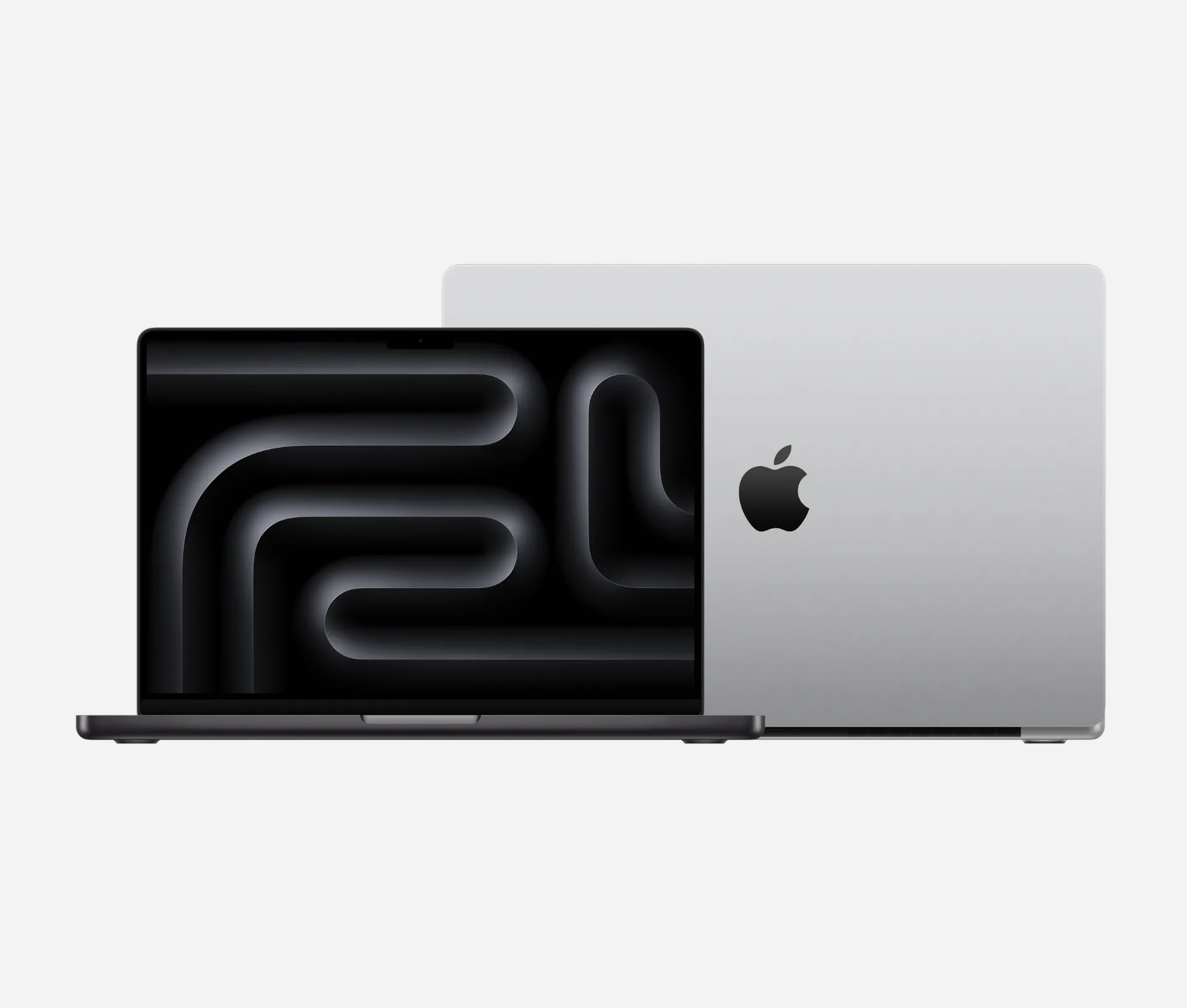
MacBook Pro is Apple’s pro laptop, currently with M5, M5 Pro, and M5 Max chip options. It is the right choice for video editing, 3D work, large-scale software development, and AI workflows. For general business use, MacBook Air typically delivers what is needed at lower cost and weight.
Magic Keyboard with Touch ID
Magic Keyboard with Touch ID is Apple’s wireless keyboard with a Touch ID fingerprint sensor, designed for Mac mini, Mac Studio, and Mac Pro setups that lack built-in biometrics. It is supported on Apple silicon Macs only and uses the Mac’s own Secure Enclave for biometric processing.
Pro Display XDR
Pro Display XDR is Apple’s reference monitor, designed for colour-critical work in video post-production and high-end design. At its price point, it is rarely deployed across a general fleet. Studio Display is the more common business choice for non-colour-critical work.
Refurbished Apple for business
Apple Certified Refurbished devices are previously sold or returned Macs, iPhones, and iPads restored by Apple to a working condition, sold at a discount with a full one-year warranty. They are eligible for Apple Business enrolment and represent meaningful cost savings on Mac procurement.
Studio Display
Studio Display is Apple’s 27-inch 5K business monitor with a built-in A13 chip handling spatial audio, camera, and microphone. It is the default external monitor for most UK Mac fleets, paired commonly with MacBook Pro, Mac mini, or Mac Studio. It does not support HDR or ProMotion.
Touch ID
Touch ID is Apple’s fingerprint authentication, available on MacBook Air, MacBook Pro, Magic Keyboard with Touch ID, and older iPhones and iPads. It uses the Secure Enclave to verify fingerprints without exposing the data to the operating system. It is the foundation of password autofill, Apple Pay, and increasingly passkey authentication on Mac.
Trade In (Apple Business Trade In)
Apple Business Trade In is Apple’s service for businesses to return old devices in exchange for credit toward new purchases, or for environmentally responsible recycling where no value remains. It is integrated with Apple Business and handles the data wipe and chain of custody to a compliant standard.
Universal Control
Universal Control is the macOS and iPadOS feature that lets a single keyboard and mouse control multiple nearby Macs and iPads seamlessly, with the cursor moving between screens. It requires no setup beyond the devices being signed in to the same Apple ID and within Bluetooth range.
Unified Memory Architecture (UMA)
Unified Memory Architecture is Apple silicon’s shared memory pool, accessible by CPU, GPU, and Neural Engine simultaneously without copying data between separate memory spaces. UMA is why Apple silicon Macs perform unusually well in memory-intensive workloads like video editing, machine learning, and AI inference relative to their RAM specifications.
macOS Operating System
macOS Tahoe (26)
macOS Tahoe is the current version of macOS, released on 15 September 2025. It was the first to use Apple’s new year-based versioning (skipping versions 16-25 to land on 26) and introduced the Liquid Glass interface, the Phone app on Mac, and significant Spotlight improvements. It is also the final macOS to support Intel-based Macs.
macOS Sequoia (15)
macOS Sequoia was the version preceding Tahoe, released in September 2024 and currently receiving security updates. Sequoia introduced iPhone Mirroring, the redesigned Passwords app, and the first major Apple Intelligence features on Mac. Most managed fleets running one version behind current are on Sequoia.
macOS Sonoma (14)
macOS Sonoma was released in September 2023 and still receives sporadic security updates. It introduced widgets on the desktop, Game Mode, and Presenter Overlay in video calls. Fleets still on Sonoma should plan an upgrade path to a supported version to stay aligned with Cyber Essentials patching requirements.
macOS Ventura (13)
macOS Ventura was released in October 2022 and is at the edge of supported macOS versions. It introduced Stage Manager and the System Settings redesign (replacing System Preferences). Fleets still on Ventura should be prioritised for upgrade, as ongoing security update support is no longer guaranteed.
macOS recovery
macOS recovery is the partition built into every Mac that allows reinstalling macOS, restoring from Time Machine, running Disk Utility, and resetting administrator passwords. On Apple silicon Macs it is accessed by holding the power button at startup. It is critical for both troubleshooting and secure device redeployment.
Migration Assistant
Migration Assistant is Apple’s built-in tool for transferring user accounts, files, apps, and settings from one Mac to another, or from a Time Machine backup. It is commonly used during Mac replacement cycles. Dr Logic recommends pairing Migration Assistant with a clean device enrolment rather than transferring management state from an old device.
Recovery Mode (Apple silicon)
Recovery Mode on Apple silicon Macs is accessed by holding the power button at startup, replacing the Intel-era Command+R shortcut. It provides access to macOS recovery, Startup Security Utility, Terminal, and Share Disk mode. Anyone supporting Apple silicon Macs needs to know the new shortcut, as the Intel one does nothing.
System Settings
System Settings is the macOS interface for system configuration, redesigned in Ventura to resemble iOS Settings. It replaced the legacy System Preferences. The redesign was controversial among long-time Mac users for its layout changes but is now the only supported interface.
System Preferences
System Preferences was the legacy name for the macOS system configuration interface, replaced by System Settings in macOS Ventura. The term is still widely used in conversation and in older documentation, but Apple’s current documentation uses System Settings exclusively.
Time Machine
Time Machine is Apple’s built-in backup utility for macOS, supporting external drives and network locations. While it is the easiest backup option for individuals, business deployments typically rely on cloud backup (Backblaze, Carbonite) or endpoint backup platforms rather than Time Machine for centralised recovery.
Universal Binary
Universal Binary is the macOS application format that contains both Intel x86_64 and Apple silicon ARM64 code in a single app bundle, letting the same app run natively on either architecture. With Intel Mac support ending after macOS Tahoe, Universal Binary’s relevance is winding down.
iOS, iPadOS, and Mobile
iOS
iOS is the operating system for iPhone, currently at version 26 (released September 2025 alongside macOS Tahoe). Apple’s year-based versioning aligns iOS, iPadOS, macOS, and watchOS to the same version number going forward. Cyber Essentials v3.3 requires iOS devices to be on a supported version receiving security updates.
iPadOS
iPadOS is the operating system for iPad, currently at version 26.4.2. It diverged from iOS in 2019 to support iPad-specific multitasking and pencil features. iPadOS 26 introduced significant multitasking improvements, narrowing the gap between iPad and Mac workflows for many business use cases.
Shared iPad
Shared iPad is a multi-user mode for iPad designed for shared device environments. Each user signs in with a Managed Apple ID and gets their own apps, data, and settings on the same physical iPad. It is most commonly used in retail, hospitality, healthcare, and education shared-device deployments.
Stage Manager
Stage Manager is the windowed multitasking interface on iPad and Mac, introduced in iPadOS 16 and macOS Ventura. It allows multiple overlapping windows on iPad, closing the gap with desktop multitasking. Business uptake has been mixed, with many users continuing to prefer the traditional iPad multitasking model.
Continuity
Continuity is Apple’s umbrella term for features that let Apple devices work together seamlessly, including Handoff, Universal Clipboard, AirDrop, Continuity Camera, iPhone Mirroring, and Sidecar. Continuity features rely on devices being signed in to the same Apple ID and on Bluetooth and Wi-Fi proximity.
Handoff
Handoff is the Continuity feature that lets a user start an activity on one Apple device and pick it up on another, for example starting an email on iPhone and finishing it on Mac. It works automatically for supported apps and is one of the more useful day-to-day Apple ecosystem features in business.
AirDrop in business
AirDrop is Apple’s peer-to-peer file transfer feature, using Bluetooth for discovery and Wi-Fi for transfer. In business, AirDrop is often restricted via DMS to prevent uncontrolled data movement between personal and managed devices. Cyber Essentials scoping commonly treats AirDrop as a control point.
AirPlay in business
AirPlay is Apple’s wireless streaming protocol for video, audio, and screen mirroring. In business, AirPlay is used for meeting room presentations via Apple TV or AirPlay-compatible displays. AirPlay 2 supports multi-room audio and is increasingly built into business AV systems.
AirPrint in business
AirPrint is Apple’s driverless printing protocol, letting iPhone, iPad, and Mac print to compatible printers without printer drivers. Most modern business printers support AirPrint. It significantly reduces the support burden of Mac and iPad printing compared with Windows-era print server configurations.
Sidecar
Sidecar is the Continuity feature that uses an iPad as a second display or drawing tablet for a Mac, wired or wirelessly. It supports Apple Pencil input for sketching and annotation in apps like Photoshop and Affinity. It is widely used in creative and design teams.
iCloud Drive in business
iCloud Drive is Apple’s cloud file storage and sync service, accessible via the Files app on iOS and iPadOS and the Finder on Mac. In business it can be managed via Managed Apple IDs through Apple Business. Many UK Mac fleets use Google Drive or OneDrive instead as the primary business file storage.
Identity, Access, and Authentication
Conditional Access for Apple
Conditional Access is the policy framework, most commonly associated with Microsoft Entra ID, that grants or blocks access to apps and resources based on device state, location, and risk signals. Apple device compliance status feeds Conditional Access decisions via DMS integration, making it the foundation of zero-trust access for Mac and iPhone.
Identity Provider (IdP)
An Identity Provider is the service that manages user authentication, commonly Microsoft Entra ID, Okta, or Google Workspace. For Mac-first businesses, the IdP integrates with Apple via Platform SSO, Managed Apple IDs, and Conditional Access. Choice of IdP shapes much of how a Mac fleet is managed day to day.
Just-In-Time (JIT) account creation
Just-In-Time account creation is the process of creating a local Mac user account on first sign-in to the Mac, sourced from the cloud identity provider rather than pre-created locally. It removes the need for upfront account provisioning and is the modern alternative to legacy Active Directory binding.
Kerberos SSO
Kerberos Single Sign-On is the legacy network authentication protocol used for on-premise Active Directory environments. macOS supports Kerberos SSO natively for fleets still tied to AD. For modern cloud-first deployments, Platform SSO has largely replaced Kerberos SSO as the recommended approach.
Managed Apple ID vs personal Apple ID
A Managed Apple ID is created and owned by the business through Apple Business and is recoverable by IT. A personal Apple ID is owned by the user. Business deployments should use Managed Apple IDs to retain control of business data, app purchases, and iCloud content when employees leave.
Multi-Factor Authentication (MFA) on Apple
Multi-Factor Authentication on Apple typically means combining a password with a Touch ID, Face ID, passkey, or authenticator app. Cyber Essentials v3.3 mandates MFA for all users on all internet-facing services. On Apple, this is best implemented via passkeys backed by the Secure Enclave rather than SMS-based MFA.
Okta for Apple
Okta is one of the most widely deployed cloud identity providers, with strong Apple integration through Platform SSO, Okta Verify, and Okta Device Trust. For Mac-first businesses choosing an IdP independently of Microsoft 365, Okta is a common selection.
OAuth for Apple
OAuth 2.0 is the authorisation framework underpinning most modern Sign in with [provider] flows. On Apple, OAuth is used by Sign in with Apple, by app integrations with Microsoft 365 and Google Workspace, and by SaaS app authentication. It is rarely encountered directly but underpins much of Apple-Microsoft and Apple-Google interoperability.
SCIM provisioning
SCIM (System for Cross-domain Identity Management) is the standard protocol for automatically creating, updating, and deactivating user accounts in cloud apps based on changes in an identity provider. SCIM is what makes joiner-mover-leaver automation possible across Mac DMS, SaaS apps, and shared services.
SAML for Apple
SAML (Security Assertion Markup Language) is the older but still widely used standard for federated authentication between an identity provider and a service. On Apple, SAML is the protocol behind most Single Sign-On to SaaS apps and is what makes the same identity work across Mac, iPhone, and web apps.
Smart Card on Mac
Smart Card authentication on macOS uses physical PIV cards (US government) or commercial smart cards for sign-in and code-signing. Native macOS support is mature. In UK businesses outside of regulated sectors, smart card usage is rare, with passkeys, Touch ID, and authenticator apps preferred.
Token-based authentication
Token-based authentication is the broad family of authentication methods that issue a time-limited cryptographic token after initial sign-in, used by subsequent requests until expiry. OAuth, SAML, and JWT-based flows are all token-based. It is the modern standard for cloud and mobile app authentication.
Networking and Infrastructure
802.1X on Mac
802.1X is the IEEE standard for port-based network access control, commonly used for enterprise Wi-Fi authentication. macOS supports 802.1X natively, with certificate-based authentication deployed via DMS. It is the standard way to secure corporate Wi-Fi for Mac fleets.
Always On VPN for Apple
Always On VPN is the mode where a VPN connects automatically and stays connected whenever the device is online. Apple supports it via the Network Extension framework, configured through DMS. It is common in remote-work-heavy fleets where consistent VPN posture is needed for compliance.
Bonjour
Bonjour is Apple’s zero-configuration networking protocol for local network service discovery, used by AirPrint, AirPlay, iMessage handoff, and file sharing. Bonjour traffic uses mDNS and can be a noisy presence on segmented enterprise networks if not handled properly.
Caching Server
Content Caching is the macOS feature that caches Apple software updates, iCloud content, and App Store downloads locally, serving subsequent requests from cache instead of redownloading. It significantly reduces internet bandwidth in larger Mac fleets. It runs natively in macOS and is enabled in System Settings or via DMS.
Cloud Storage for Apple fleets
Cloud Storage in Apple business contexts typically means iCloud Drive (via Managed Apple IDs), Google Drive, OneDrive, or Dropbox. Choice of cloud storage shapes file-sharing workflows, backup strategy, and compliance posture. The Dr Logic team commonly sees Google Drive paired with Mac fleets in UK SMBs.
Network Extension framework
The Network Extension framework is the Apple framework that lets third-party apps extend or modify network behaviour, including VPN clients, content filters, and DNS proxies. It replaced the older system extension model and is the basis for modern Mac and iPhone VPN clients.
RADIUS authentication for Apple
RADIUS (Remote Authentication Dial-In User Service) is the legacy protocol for centralised network authentication, most commonly seen authenticating 802.1X Wi-Fi connections. macOS supports RADIUS via 802.1X. Most enterprise Wi-Fi deployments in Mac fleets use RADIUS as the back-end authentication source.
VPN on Apple
VPN on Apple is supported natively in macOS, iOS, and iPadOS through both the built-in IKEv2, IPsec, and L2TP clients and the Network Extension framework for third-party clients. Common business VPN clients on Apple include Cisco AnyConnect, Palo Alto GlobalProtect, and FortiClient.
Wi-Fi 6 / 6E / 7 in business
Wi-Fi 6 (802.11ax) and Wi-Fi 6E added the 6GHz band, while Wi-Fi 7 (802.11be) added higher throughput and lower latency. Current Apple silicon Macs support Wi-Fi 7 (M5 generation) or Wi-Fi 6E (M4 generation). Business Wi-Fi refresh cycles should align with the dominant generation in the fleet.
Apple in Business and Procurement
Apple Authorised Reseller (UK)
An Apple Authorised Reseller is a business permitted by Apple to sell Apple hardware, often with additional services such as procurement, leasing, and Apple Device Enrolment configuration. In the UK, larger Apple Authorised Resellers integrate directly with Apple Business and pre-enrol fleets before despatch.
Apple at Work
Apple at Work is Apple’s umbrella positioning for its business product set, covering hardware, Apple Business, Apple Intelligence, security, and partner network. It is a marketing term rather than a specific product. Apple at Work resources are the primary public-facing destination for IT decision-makers researching Apple in business.
Apple Business Essentials
Apple Business Essentials was Apple’s US-only subscription bundling MDM (as it was known before DMS), iCloud Storage, and AppleCare for small businesses. With the April 2026 launch of Apple Business, Apple Business Essentials was consolidated into the broader platform and is no longer offered as a separate product.
Apple Financial Services (UK leasing)
Apple Financial Services is Apple’s leasing and finance arm for business hardware purchases. It offers operating leases, finance leases, and Device-as-a-Service arrangements through Apple Authorised Resellers. It is the most common route for UK businesses spreading Mac and iPad procurement cost across two or three years.
Apple Premium Technical Partner
Apple Premium Technical Partner is the top tier of Apple’s restructured Apple Partner Network, which replaced the Apple Consultants Network in autumn 2025. The status reflects deep technical expertise, training requirements, and demonstrated track record of supporting Apple in business. Dr Logic holds this status. See our Apple Premium Technical Partner page.
Apple Professional Services
Apple Professional Services is the formal Apple-delivered consultancy offering covering deployment, migration, and integration projects. It is typically engaged for large enterprise Apple rollouts. For UK SMBs, Apple Premium Technical Partners like Dr Logic deliver equivalent services at the SMB scale.
Apple Service Programs
Apple Service Programs cover post-purchase support, including AppleCare, repair routing through Apple Authorised Service Providers, and warranty extensions. For business fleets, AppleCare for Business and partner-delivered support contracts (such as those offered by Dr Logic) typically combine to give the right service level.
Apple Trade In for Business
See Trade In. Apple Trade In for Business is the business-facing version of Apple Trade In, integrated with Apple Business and covering data wipe, chain of custody, and credit application.
Device-as-a-Service (DaaS) for Mac
Device-as-a-Service is the procurement model where Macs, iPhones, and iPads are leased rather than purchased, typically bundled with support, repair, and refresh cycles. For UK businesses, DaaS is offered through Apple Financial Services, leasing companies, and managed service providers including Dr Logic’s IT Success Plans.
Enterprise IT Apple lease
An enterprise IT Apple lease is a multi-year financing arrangement, typically 24 or 36 months, covering Apple hardware acquisition with planned refresh at end of term. Leasing protects cashflow, eases hardware refresh planning, and is commonly bundled with managed IT support.
Apple AI and Productivity
Apple Intelligence
Apple Intelligence is Apple’s on-device and cloud AI platform, introduced in 2024. It powers Writing Tools, Image Playground, Siri improvements, and Visual Intelligence across iPhone, iPad, and Mac. Apple Intelligence runs locally on Apple silicon for most tasks, with sensitive workloads routed through Private Cloud Compute.
Image Playground
Image Playground is the Apple Intelligence feature that generates images from text prompts and reference photos, available as a standalone app and integrated into Messages and Notes. It runs on-device on Apple silicon hardware and is the consumer-facing image generation entry point in the Apple ecosystem.
Image Wand
Image Wand is the Apple Intelligence feature in the Notes app that turns rough sketches or surrounding text into polished images. It is one of the more useful Apple Intelligence features for business note-taking and brainstorming workflows.
Private Cloud Compute
Private Cloud Compute is Apple’s privacy-preserving cloud infrastructure for Apple Intelligence requests too large to run on-device. It uses verifiable Apple silicon servers, end-to-end encryption, and externally auditable software builds. PCC is designed to give cloud AI capabilities while retaining Apple’s privacy guarantees.
Smart Reply (Apple)
Smart Reply is the Apple Intelligence feature that suggests contextual responses in Mail and Messages, drafted on the user’s behalf from a short user prompt or from the message context. It is one of the more visible day-to-day Apple Intelligence features in business email handling.
Writing Tools (Apple)
Writing Tools is the system-wide Apple Intelligence feature for proofreading, rewriting, summarising, and tone-adjusting text in any app that supports the Apple text engine. It runs on-device on Apple silicon and is one of the more useful Apple Intelligence features for general business productivity.
Compliance, Standards, and Certifications
Cyber Essentials and Apple
Cyber Essentials is the UK government-backed baseline cyber security certification. Apple devices are well-suited to Cyber Essentials compliance through FileVault, Gatekeeper, XProtect, and DMS-enforced controls. The current version is v3.3, applicable from 27 April 2026. See our Cyber Essentials service page.
Cyber Essentials Plus and Apple
Cyber Essentials Plus is the audited tier of Cyber Essentials, requiring on-site verification including authenticated vulnerability scans of a sample of devices. Mac fleets are typically simpler to evidence than mixed Windows fleets due to fewer third-party components needing patch verification, provided DMS is properly configured.
ISO 27001 and Apple
ISO 27001 is the international standard for information security management systems. Apple devices fit into ISO 27001 environments through DMS-enforced controls mapped to the standard’s Annex A controls. ISO 27001 is broader than Cyber Essentials and is typically pursued by businesses serving enterprise or regulated clients.
NIST and Apple
NIST refers to the US National Institute of Standards and Technology, whose Cybersecurity Framework (CSF) is widely referenced in UK security work. Apple’s DMS controls map well to NIST CSF functions. NIST 800-53 and 800-171 are sometimes referenced in UK businesses serving US clients with US federal exposure.
UK GDPR and Apple
UK GDPR is the UK’s data protection regulation, equivalent in most respects to EU GDPR. Apple’s privacy posture (Private Cloud Compute, Advanced Data Protection, end-to-end encryption, Managed Apple IDs) supports GDPR compliance, but the regulation applies to how the business handles personal data, not to the platform itself.
Cross-Platform and Hybrid
Active Directory binding (Mac)
Active Directory binding was the legacy method for joining a Mac to an on-premise Active Directory domain, providing centralised user account management. Apple has effectively deprecated AD binding in favour of Platform SSO and Just-In-Time account creation, though many UK organisations still operate bound Macs.
Cross-platform MDM
Cross-platform MDM refers to device management platforms that handle Apple alongside Windows, Android, ChromeOS, and Linux from a single console. Common cross-platform MDMs include Microsoft Intune, Workspace ONE, Hexnode, and JumpCloud. Apple-only fleets typically get better results from dedicated Apple DMS.
Hybrid IT environment (Mac and PC)
A hybrid IT environment is one where Macs and PCs are both deployed, often with iPhones across both populations. Most UK businesses are hybrid rather than pure Mac or pure Windows. Effective hybrid IT depends on shared identity (Entra ID, Google Workspace) and cross-platform-aware policies. See our Apple and Hybrid Support page.
How Dr Logic Maintains This Glossary
The Apple IT landscape moves fast. Apple Business launched in April 2026. Cyber Essentials moved to v3.3 in the same month. macOS Tahoe became the final macOS to support Intel. Apple introduced M5, M5 Pro, and M5 Max chips in the first quarter of 2026.
Dr Logic reviews this glossary quarterly. Where definitions shift because Apple has renamed, reorganised, or retired a product, we update the entry and flag the change with the legacy term clearly labelled.
If you spot something out of date, or there’s a term you’d like added, get in touch at moc.cigolrd@olleh.
FAQs
What is the difference between Apple Business and Apple Business Manager?
Apple Business is the current unified Apple business platform, launched in April 2026. Apple Business Manager was the previous-generation portal, focused on device enrolment and procurement. ABM was consolidated into Apple Business, along with Apple Business Essentials and other tools. In conversation, many IT teams still use ABM as shorthand.
Do all UK businesses need a third-party MDM like Jamf or Kandji?
Not all UK businesses need a third-party MDM. Since April 2026, Apple Business includes a free built-in MDM that covers most basic device management needs. Third-party MDMs like Jamf Pro, Kandji, and Mosyle add depth, automation, and integrations needed by larger or more security-focused fleets above around 25–50 devices.
Is Apple Intelligence available to UK businesses?
Apple Intelligence is available to UK businesses on supported Apple silicon devices. Most features run on-device, with more complex requests routed through Private Cloud Compute. Apple Intelligence requires an M1 chip or later on Mac, an A17 Pro or later on iPhone, and an M-series chip on iPad. Business deployment can be managed via MDM.
Are passkeys required for Cyber Essentials in 2026?
Passkeys are not explicitly required for Cyber Essentials v3.3, but they are infinitely more favourable as a more secure alternative to passwords with MFA. The April 2026 update updated the user access control section to highlight passwordless authentication. UK businesses preparing for renewal under v3.3 should treat passkeys as the direction of travel rather than waiting to be mandated.
Need Help Putting Any of This Into Practice?
Knowing the terminology is one thing. Deploying it across a UK Mac fleet, aligning it to Cyber Essentials, and keeping it current as Apple evolves the platform is another. As an Apple Premium Technical Partner, Dr Logic supports UK Mac-first businesses across IT Support, Cyber Security, and Apple and Hybrid Support.
Get in touch if you’d like to talk through your Apple IT setup.